INDOOR LED DISPLAY · GLOBAL DELIVERY
Indoor LED Screens, Engineered for Close-Viewing Spaces.
Five pixel pitches from P1.9 to P4.8 on a single 250 × 250 mm module. Slim aluminium cabinets, full front maintenance, optional 3,000–3,500 nits for daylight-readable storefronts. Ready to ship to any continent.
- Pitch
- P1.9–P4.8
- Brightness
- 1,200 / 3,500 nits
- Module
- 250 × 250 mm
- Warranty
- 3 years
An indoor LED screen is a fixed flat-panel display built from a regular grid of light-emitting diodes acting as individual pixels. The format replaces static printed signage, projection screens, and back-lit posters with a single surface that can show video, real-time data, scheduled content loops, and live broadcast — all swappable from a single content player.
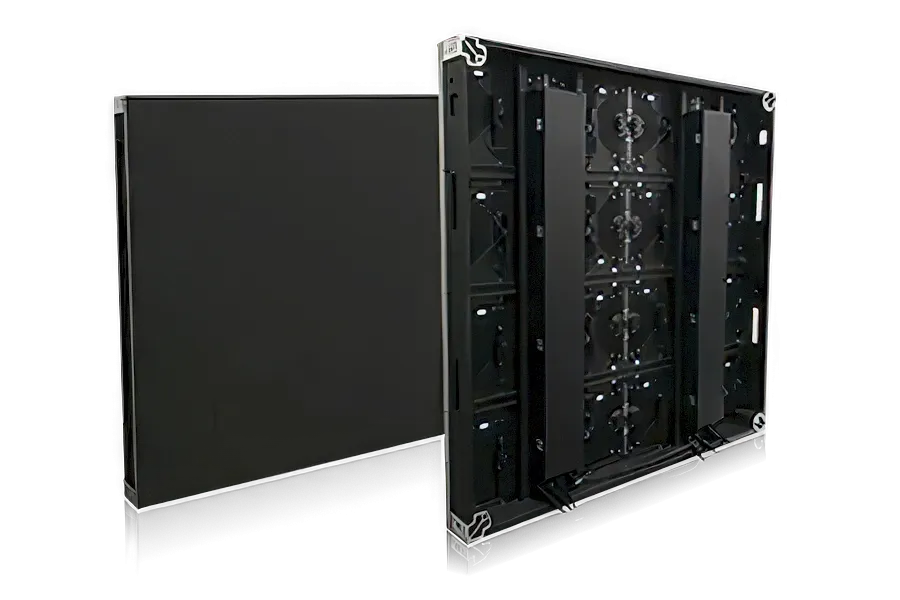
The catch with most indoor displays is the trade-off between resolution and viewing distance. Push the pixel pitch finer and the image holds up at arm's length, but the cabinet weight, the power draw, and the unit price climb with it. The ARECH indoor LED screen series solves the trade-off through module commonality: all five pitches from P1.9 to P4.8 sit on the same 250 × 250 mm module footprint, so a venue can spec the resolution it actually needs without re-engineering the cabinet build.
WHY ARECH
Why ARECH for an Indoor LED Screen Install
Experience Brilliance, Backed by Strength.
-
Image quality at close range
Pixel density tight enough to read clean text from arm's length, a wide colour gamut tuned for natural skin tones and brand reds, and a per-cabinet calibration profile that holds the seam between two panels invisible under content. The 800–1,200 nits standard variant suits controlled-light interiors; the 3,000–3,500 nits high-bright option keeps the image legible behind plate glass and under sunlit atrium roofs.
-
Module compatibility across pitches
Every pixel pitch in the series (P1.9 / P2.6 / P2.9 / P3.9 / P4.8) uses the identical 250 × 250 mm module. A wall built today at P2.6 can be re-pitched to P1.9 in five years without ripping out the cabinets. Same mechanical envelope, same mounting hardware, same service tooling.
-
Slim cabinets, low weight, easy install
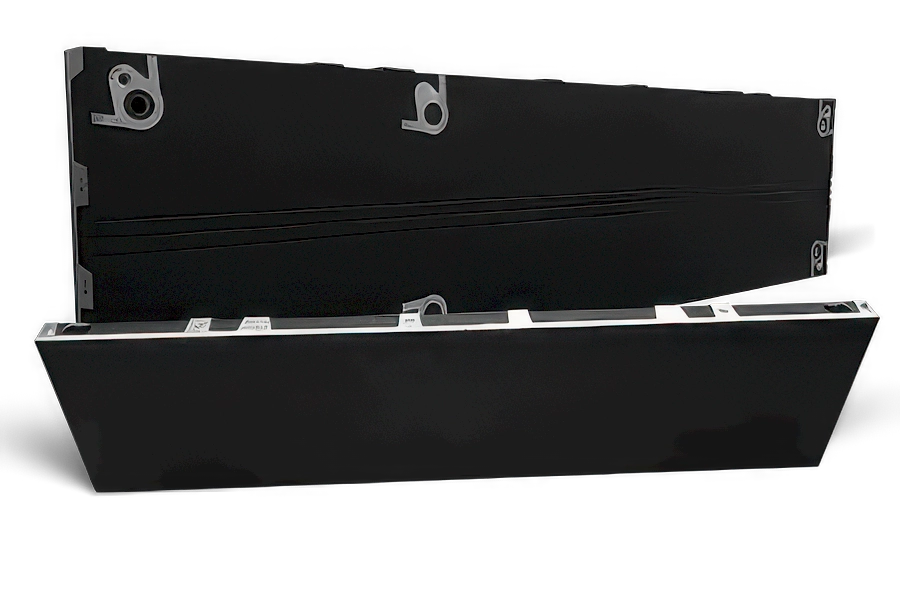
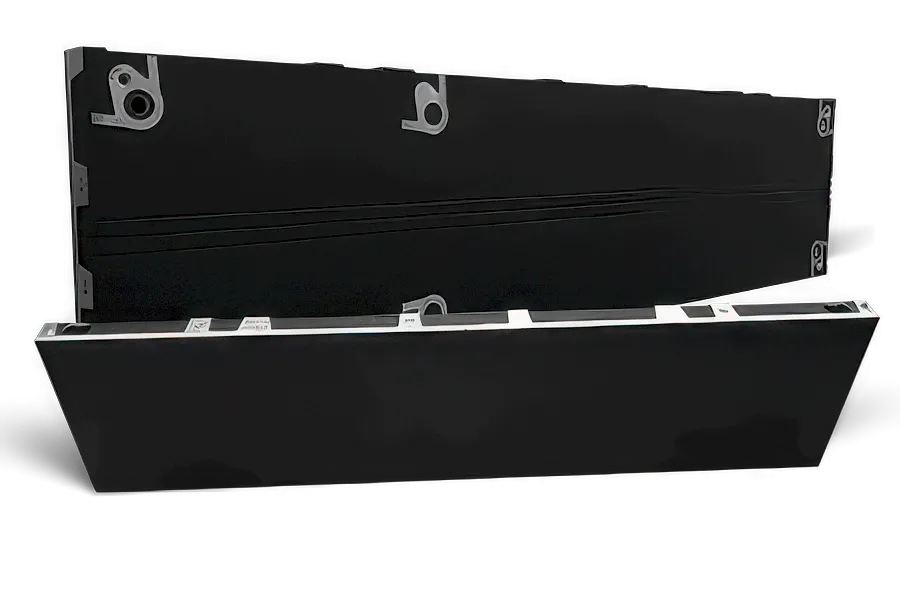
Aluminium-profile cabinets at 40 mm depth keep the panel close to the host wall. A 1000 × 250 mm cabinet weighs 5.5 kg — light enough for two installers to mount a multi-cabinet wall without lifting equipment.
-
Full front maintenance
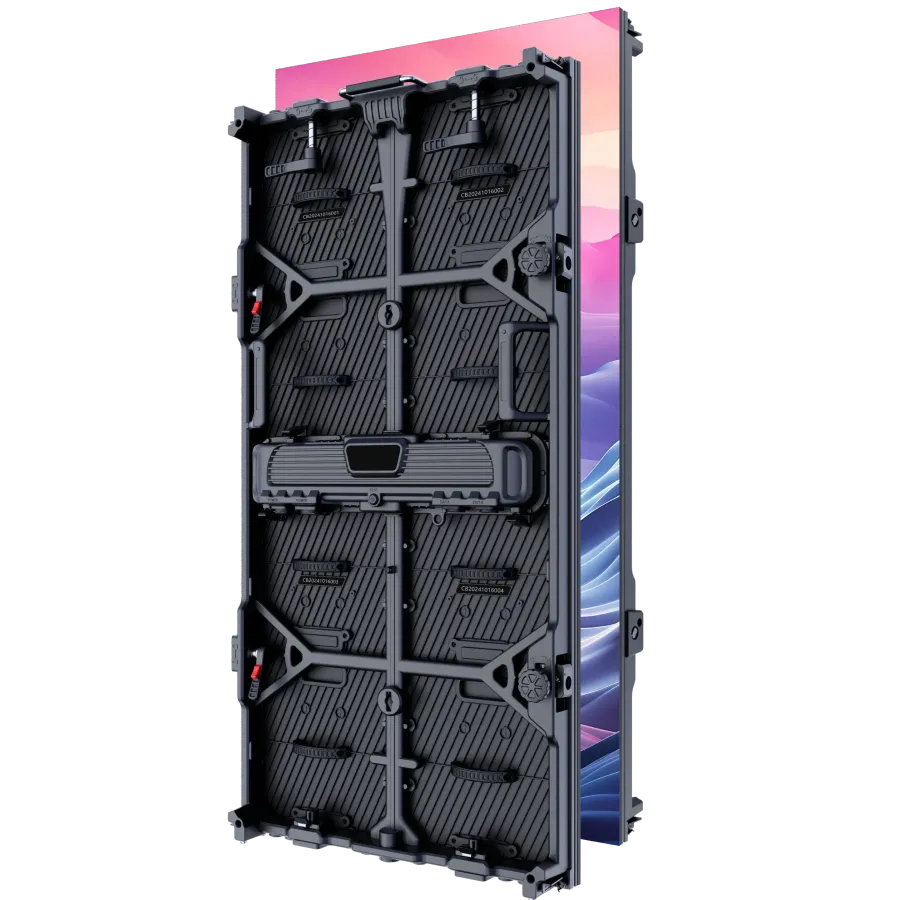
LED modules, power supplies, and receiving cards all lift out from the front using a magnetic tool. The architecture is built for the installation reality of indoor venues — walls in retail flagships and corporate lobbies are usually built flush with no rear access.
SPECIFICATIONS
Indoor LED Screen Specifications
The complete specification ladder for the indoor series. Confirm the row that fits the venue, then request the full PDF spec sheet for that variant.
Brightness, lifespan, service
- Standard brightness: 800–1,200 nits — calibrated for controlled-light interiors.
- High-brightness option: 3,000–3,500 nits — for storefronts, atriums, and any interior with significant daylight ingress.
- Operating life: 100,000+ hours with brightness held above 50% of day-one rating.
- Service architecture: 100% front service. Magnetic tool lifts LED modules, power supplies, and receiving cards from the front face.
APPLICATIONS
Where an Indoor LED Screen Earns Its Place
Pixels with Purpose.
-
Retail flagships and shopping centres
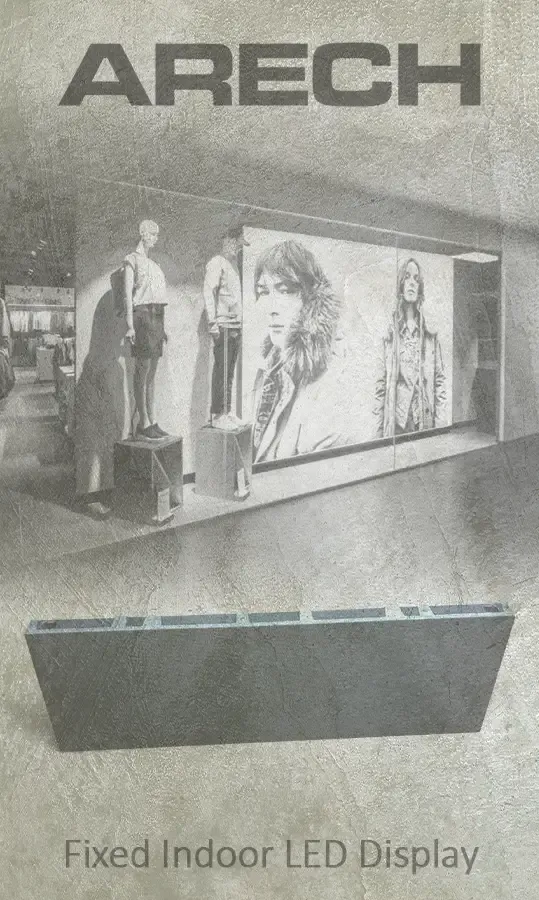
Window-front walls running seasonal campaigns, in-store product spotlights, mood walls behind point-of-sale, and immersive brand backdrops. Content is loop-driven and changes per campaign — no print runs, no static lifecycle. The high-brightness option covers window installations where direct daylight reaches the panel.
-
Corporate lobbies and broadcast studios
Reception walls running company brand reels, news ribbons, or live event feeds. Conference and boardroom installations for video conferencing and presentation. Broadcast studio backdrops with flicker-free refresh and accurate skin-tone calibration.
-
Hospitality and entertainment venues
Hotel lobby focal walls, restaurant menu boards that change by service, bar and nightclub atmospheric video, casino floor signage, cinema concession boards. One product family covers the full hospitality footprint.
-
Transport hubs
Airport concourse and gate-area video walls, train-station wayfinding screens, subway platform information displays, bus terminal arrivals boards. Long-life operation matters here because the screens run twenty hours a day, every day.
-
Public spaces and institutions
Museum exhibit walls, school lobby displays, bank branch information ribbons, hospital wayfinding and waiting-room screens. A reliable, low-maintenance display that earns its install cost back across years of duty.
-
Control rooms and 24/7 monitoring
Mission-critical operation, fine-pitch detail for dense data layouts, flicker-free refresh for broadcast cameras, colour calibration that matches across all cabinets in the wall. A P1.9 indoor LED screen reads cleanly at the desk-to-wall distance of most operations centres.
HOW TO SPEC
How to Spec an Indoor LED Screen
A four-step shortcut for converging on the right configuration before requesting a quote.
-
Measure the viewing distance.
The closest viewer drives the pitch decision. Closer than 2 m → P1.9. 2 to 3 m → P2.6. 3 to 4 m → P2.9. 4 to 5 m → P3.9. Past 5 m → P4.8. Pitch can be re-spec'd later without changing cabinets thanks to module commonality.
-
Pick the cabinet ladder.
Tall narrow display → 1000 × 250 mm. Compact retail strip → 500 × 500 mm. Wide medium wall → 500 × 1000 mm. Large-area surface → 1000 × 750 mm. All cabinets stack to any multiple of 250 mm.
-
Read the ambient light.
Indoor controlled lighting → standard 800–1,200 nits. Window-front or sunlit atrium → high-brightness 3,000–3,500 nits option.
-
Confirm the install plan.
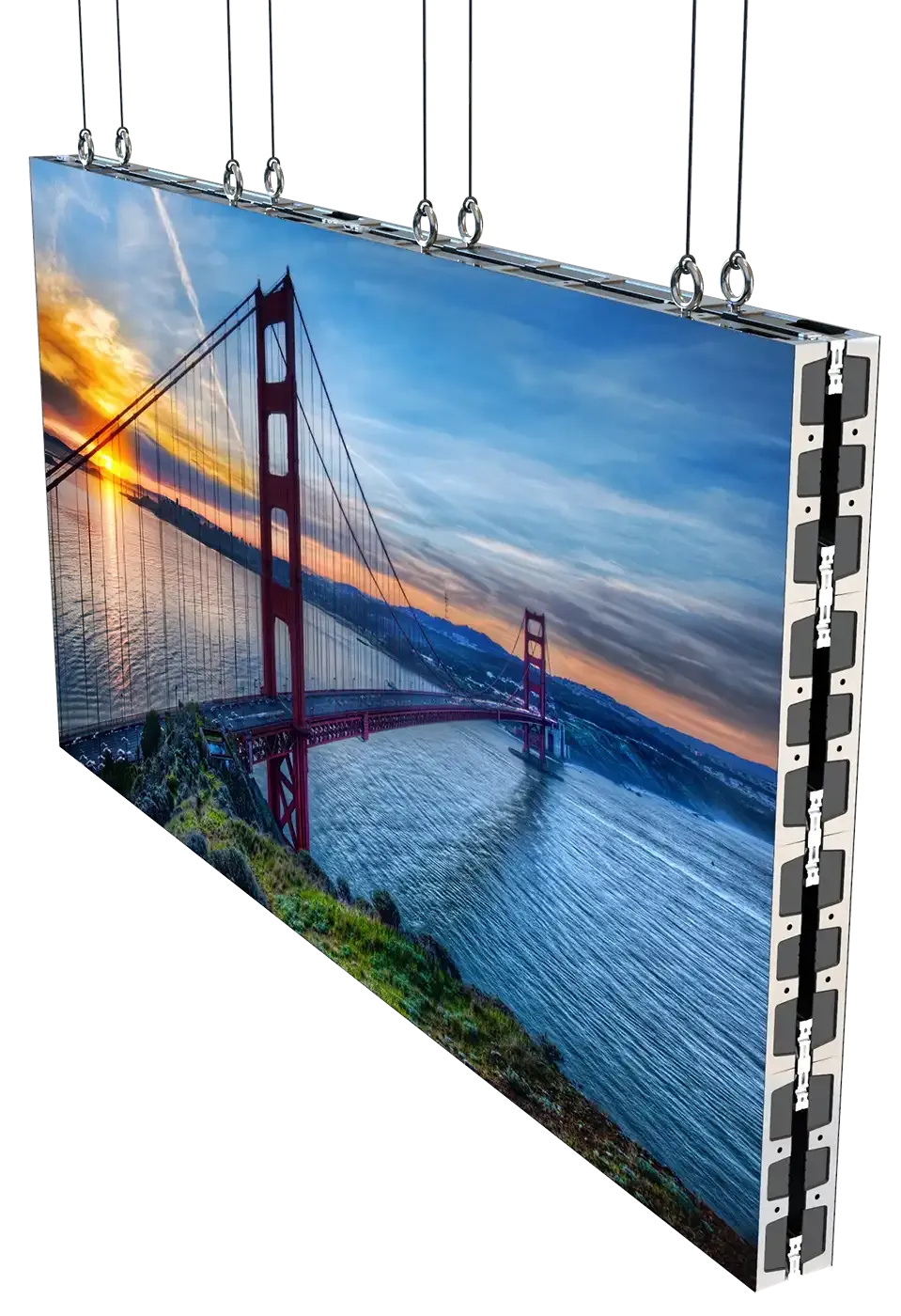
Flush against a wall with no rear access → mandatory front-maintenance build (default across the series). Suspended ceiling, freestanding floor frame, or stacked formation — all supported. Detailed installation manuals ship with every order.
When the four answers are in hand, send the brief to our engineering team. Reply window is typically the next business day with a specific model recommendation, a price, and a delivery date.
Why Customers Move From Print to an Indoor LED Screen
A practical comparison between traditional indoor signage and a fine-pitch LED wall.
- Brand presence. A high-resolution video wall puts a room in the current decade; the same room with printed posters reads ten years behind. Retail conversion studies consistently put dynamic signage ahead of static for dwell time and recall.
- Content control. Update the message from a central content player instantly. Seasonal campaigns, day-part menus, live event reels, product reveals — all swap without a print queue, a delivery wait, or an installer call-out.
- Cost over the install lifetime. Static signage requires reprints, replacement, and installation labour every campaign cycle. An indoor LED screen amortises that cost across a 100,000+ hour service life and replaces every replacement event with a content upload.
- Audience signal. Motion grabs the eye before stills do — that is how human peripheral vision is wired. For retail, the payoff is dwell time at the window; for broadcast, a backdrop that reads as a current-decade production instead of a 2010s set.
How the Indoor LED Screen Range Compares With the Other Four Families
This page covers the indoor series in depth. For projects with different briefs:
-
01
Outdoor LED Screen
Rain, dust, direct sunlight, billboards, building facades.
Explore outdoor -
02
Flexible LED Screen
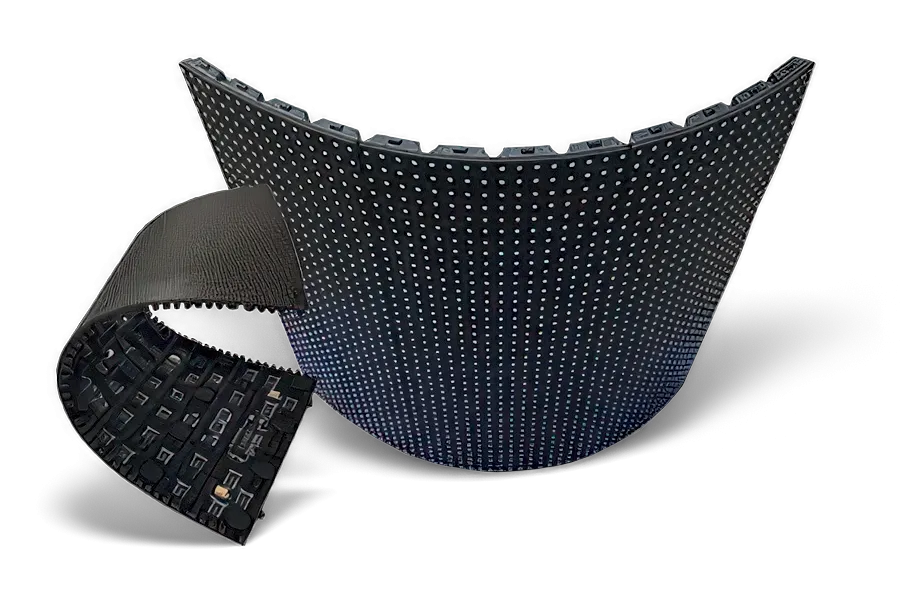
Curved or sculptural geometry — column wraps, dome ceilings, free-form architectural pieces.
Explore flexible -
03
HD Wall LED Display
Sub-2 mm pitch close-viewing — control rooms with extreme density, broadcast walls at arm's reach.
Explore HD wall -
04
Rental LED Display
Touring, events, fast rig-and-strike — concerts, conferences, exhibitions, weddings.
Explore rental
Indoor LED Screen — frequently asked questions.
What pixel pitch options are available for the ARECH indoor LED screen series?
What does "front maintenance" mean and why is it important?
What standard cabinet sizes are available for ARECH indoor LED screens?
Can the indoor LED screen run in a bright environment like a storefront window?
How heavy are the cabinets and how are they mounted?
What is the typical lifespan of an ARECH indoor LED screen?
Specify Your Indoor LED Screen Indoor LED Screen
Send the venue dimensions, the closest viewer distance, the ambient light read, and the install context (flush wall / suspended / freestanding). We answer with a specific model row out of the indoor series, a price, and a delivery window — typically inside one business day.
Request a Quote