
Curved and Flexible LED: How It Bends and Where It Fits
Curved and Flexible LED: How bend into columns, domes, and sculptural shapes, why magnetic mounting makes them serviceable, and why they beat any custom builds.
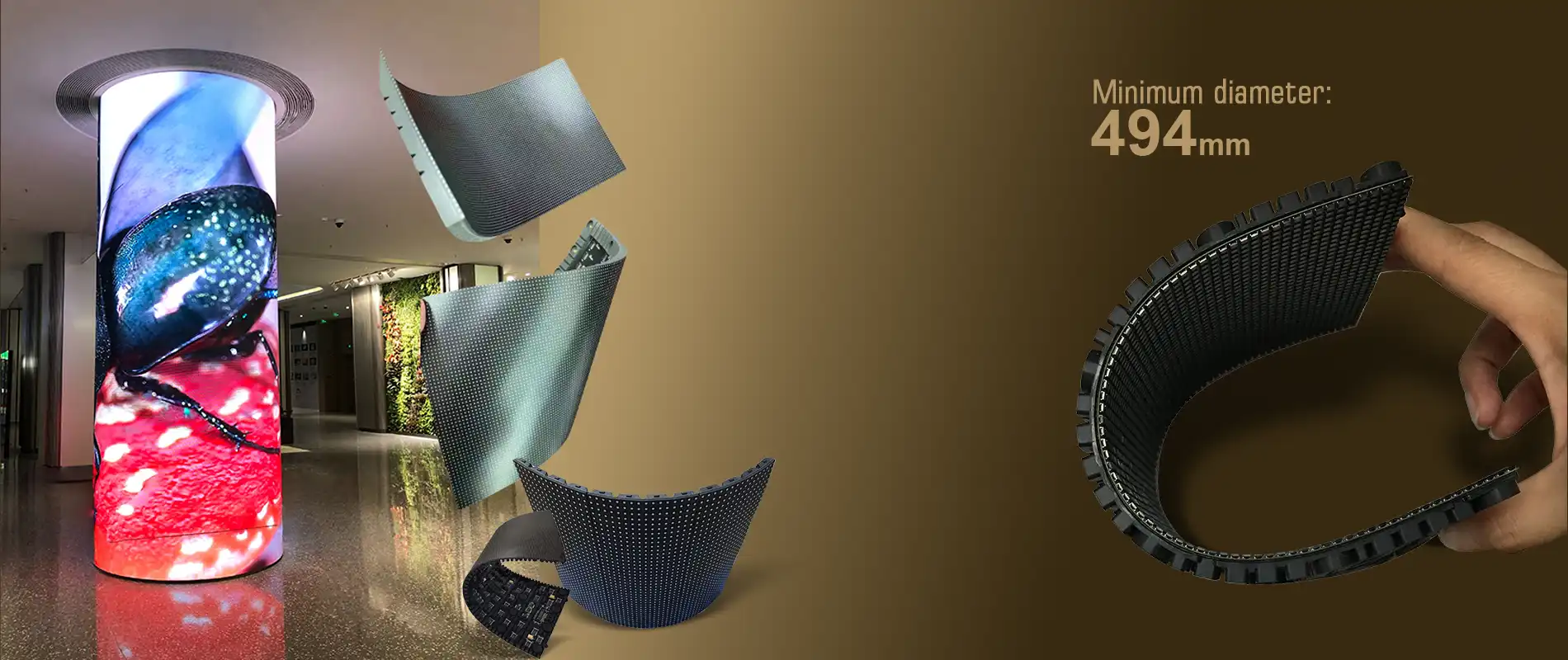
Curved and Flexible LED: A flat LED wall is a solved problem. A column wrap, a domed ceiling, or an S-shaped feature wall is where most buyers hit the question: build it from custom rigid cabinets, or use a bendable module? Here is how flexible LED works, and why it usually wins for anything that is not flat.
What Makes a Flexible LED Module Different
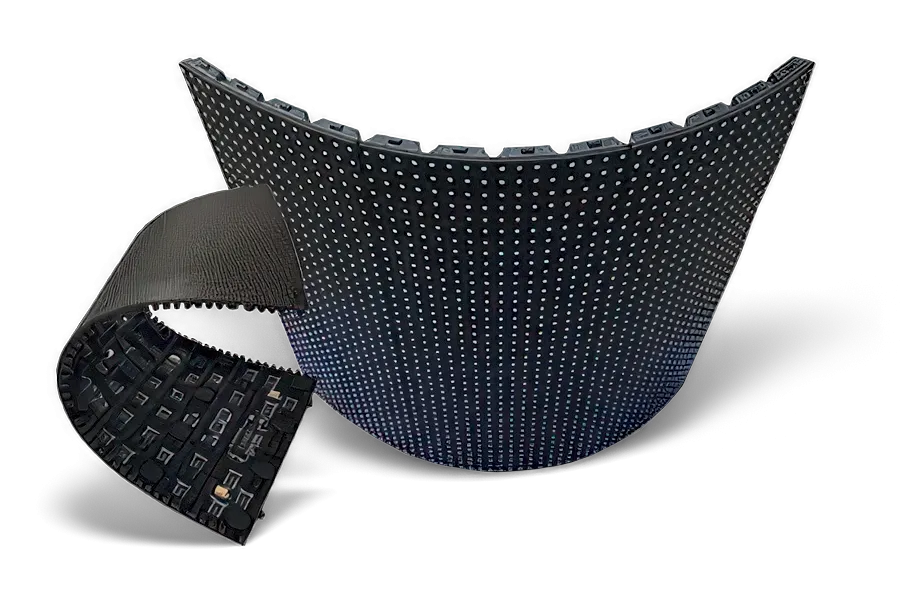
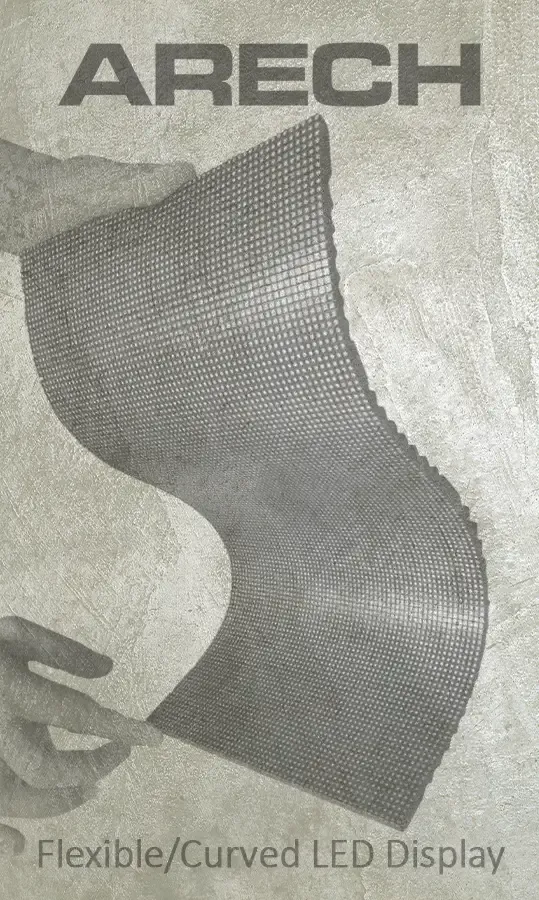
A flexible LED module is built on a soft, bendable PCB instead of a rigid board. That single change is what lets the surface follow a curve rather than approximating it with faceted flat panels.
Two numbers carry the difference. The ARECH flexible module is 7 mm thin and weighs about 0.17 kg per module — roughly 34 kg per square metre as a finished system. Thin and light is what makes it practical to wrap a column or line the inside of a dome without a heavy sub-structure fighting you.
The module does not bend itself into shape, though. The curve lives in the framework.
The Curve Happens at the Framework, Not the Cabinet
This is the part that surprises people. The bendable module attaches magnetically to a ferromagnetic steel framework that is built to the target curve. You shape the frame to the geometry you want; the modules snap on and follow it.
That has two consequences:
- The shape is set on site by the frame, not fabricated into the panel. No bespoke metalwork per cabinet, no per-panel curved tooling.
- Service is a magnetic lift, not a teardown. Any single module pulls off the front for inspection or replacement without dismantling its neighbours or stripping the surrounding wall. The service tool is a magnetic lifter, not a cabinet-disassembly kit.
What Shapes It Can Actually Form
The geometry list is wide. A flexible LED surface can form:
- Cylindrical column wraps and full-circle pillars
- Concave alcoves and convex feature walls
- S-shaped and wave surfaces
- Dome and barrel-vault ceilings
- Circular logo rings
- Free-form sculptural pieces
The working rule: any shape achievable with a smooth-curve steel framework is in scope. Sharp corners are the exception — a hard 90-degree edge needs a small flat transition module or a discrete cut break, because a soft-PCB module bends, it does not fold.
Picking the Pitch for a Curved Surface
Pitch on a flexible screen follows the same rule as any LED display — it tracks the closest viewer — but curved installs tend to be viewed close, so they skew finer:
- Close-up retail or museum exhibits at 1–2 metres → P2 or P3.
- Mid-range lobby or hospitality features at 3–4 metres → P4.
- Large curved facades read from across a plaza → P6 and above.
Finer sub-2 mm flexible work is available on request when the brief calls for it. The general pitch-versus-distance reasoning is in pixel pitch explained.
Why It Usually Beats a Rigid Custom Build
For anything curved, the honest cost comparison is flexible module versus custom-fabricated rigid cabinets — and flexible is typically the cheaper route.
Building a curved wall from rigid cabinets means bespoke metalwork, bespoke calibration per odd cabinet, and complex labour at install to coax flat boxes into an approximated curve. The flexible series replaces all of that with a standardised, off-the-shelf bendable module: the curve happens at the framework, the modules are repeatable, and engineering, fabrication, and install costs all come down.
There is a quality dividend too — a true curve reads as a curve, not as a faceted polygon of flat panels with visible breaks at each join.
Where Flexible Fits in the Range
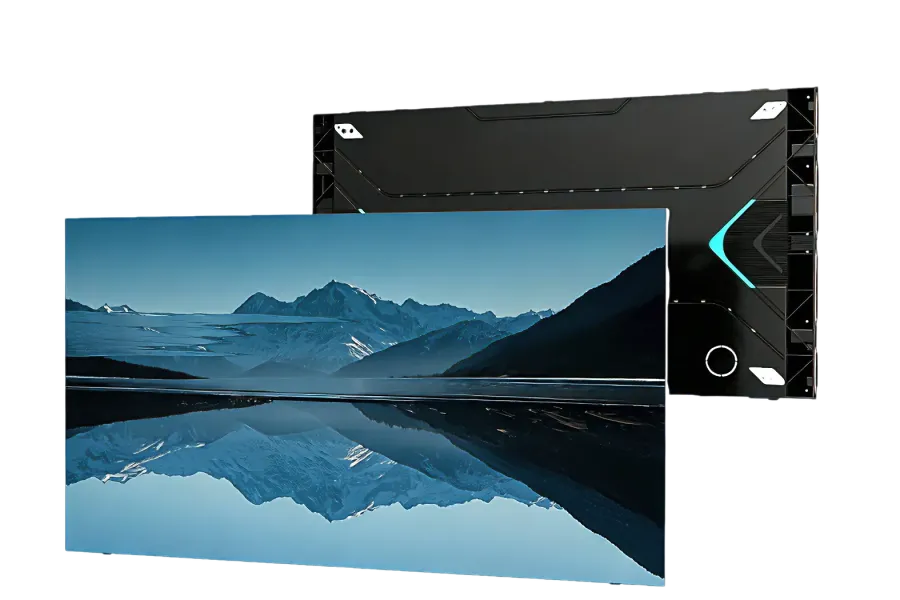
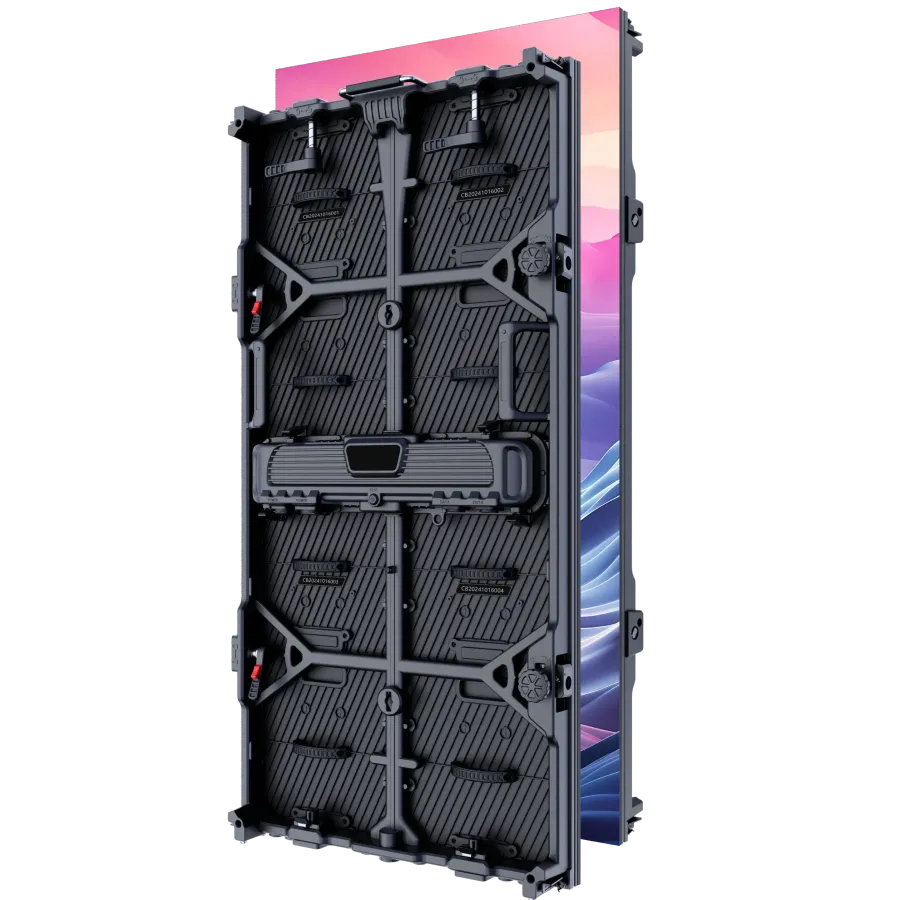
Flexible is one of five families ARECH builds on one line. It is the right pick when the surface is not flat. When it is flat, the indoor and outdoor families are simpler and cheaper; for close-viewed flat detail, the HD wall range goes finer; for touring and temporary, rental is built to travel. The full flexible LED screen page carries the complete spec, including the indoor and outdoor variants.
Send the Drawing
Curved work lives or dies on the drawing. Send the elevation, the radius or the 3D geometry, the viewing distance, and the environment (interior or weather-exposed), and the engineering team returns a feasibility note, a pitch recommendation, and a price. The engineer who reviews the drawing stays on the project through commissioning.
CONTINUE READING
More from the blog
-
How ARECH's LED Display Warranty Works: 2 or 3 Years, and What Decides It
How ARECH's LED Display Warranty Works: why the term is 2 or 3 years depending on the LED chip, what is excluded, and…
-
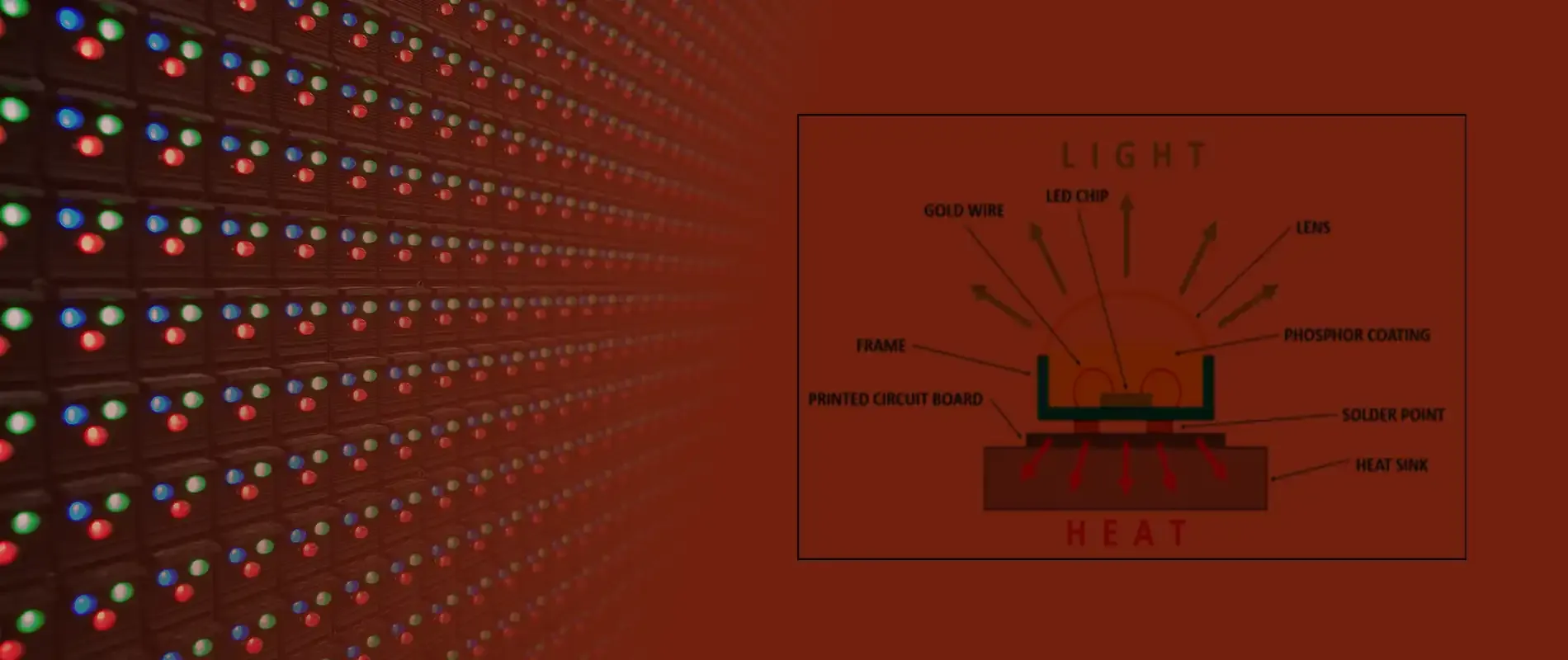
Inside the Ageing Chamber: Every Cabinet is tested
Inside the Ageing Chamber: Every ARECH LED cabinet runs an ageing-chamber burn-in cycle before pack-out.
-

What ARECH's LED Display Certifications Mean: CE, FCC, RoHS, ISO 9001, LVD
What ARECH's LED Display Certifications Mean: CE, FCC, RoHS, and ISO 9001, LVD certification each cover on an LED…
-

Indoor vs Outdoor LED Displays: How to Choose the Right One
Indoor vs Outdoor LED Displays: differ in brightness, weatherproofing, pixel pitch, and cabinet build. Here is how to…
-

Pixel Pitch Explained: Matching an LED Display to Viewing Distance
Pixel Pitch Explained - What pixel pitch means, how it sets minimum viewing distance, and how to pick the right LED…
-

Inside the ARECH Factory: One Line, Five Product Families
Inside the ARECH Factory: We builds indoor, outdoor, flexible, HD wall, and rental LED displays on one integrated line…