
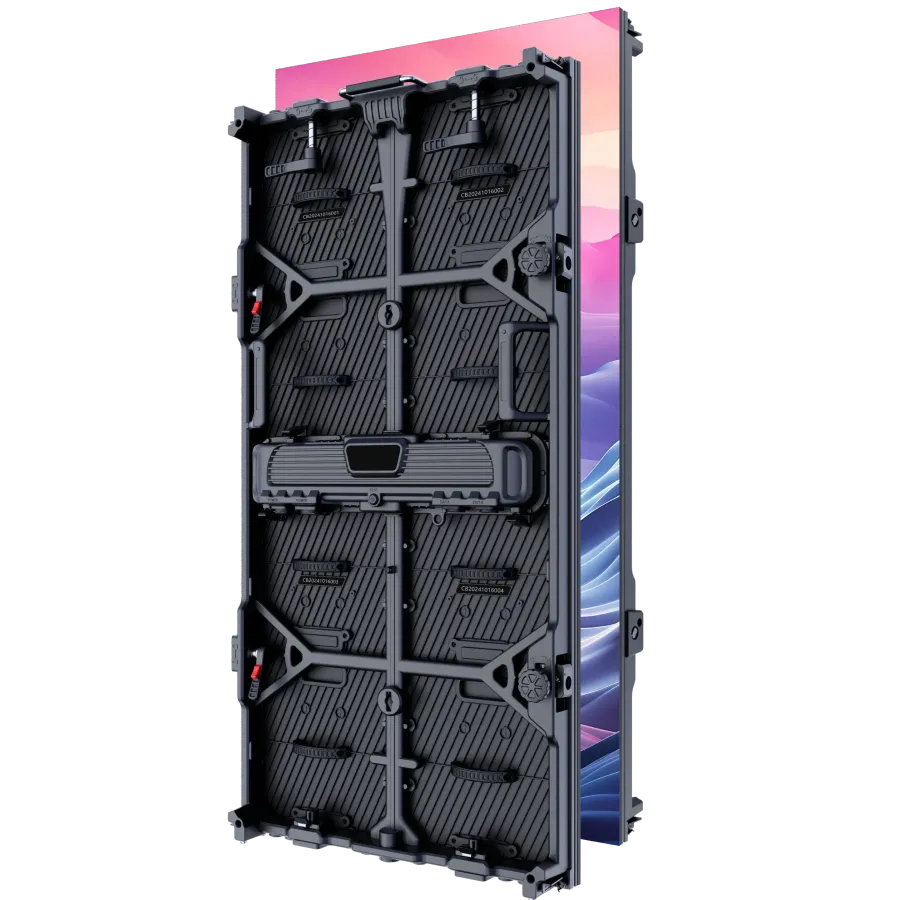

Pixel Pitch Explained: Matching an LED Display to Viewing Distance
Pixel Pitch Explained - What pixel pitch means, how it sets minimum viewing distance, and how to pick the right LED display pitch for indoor, HD wall, outdoor, and rental jobs - from ARECH.
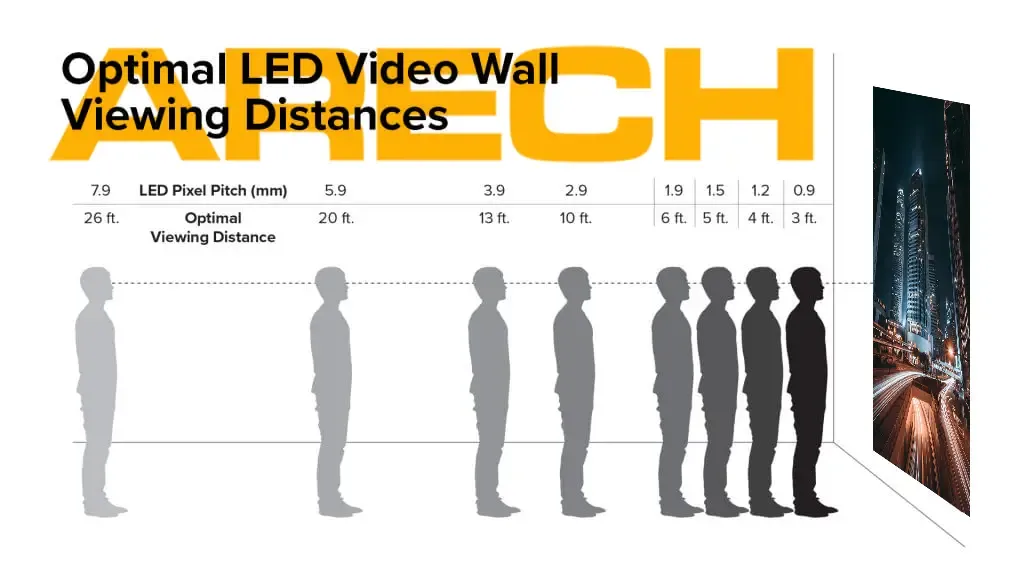
Pixel Pitch ExplainedȘ Pixel pitch is the single number that decides how close a viewer can stand before the image breaks into dots. Get it right and the image holds together with no visible gaps. Spec it wrong and you either waste budget or ship a screen that looks coarse at the distance people actually watch from.
What Pixel Pitch Actually Measures
Pixel pitch is the distance between the centre of one LED pixel and the centre of the next, measured in millimetres. A 2.5mm pitch — written P2.5 — means 2.5mm from pixel to pixel. A P10 outdoor module spaces its pixels 10mm apart.
Smaller pitch means more pixels in the same area, which means more resolution and a sharper image up close. Larger pitch means fewer pixels per square metre, lower cost per square metre, and an image built for distance.
That is the whole trade-off in one sentence: pitch buys you closeness. The question is never "what is the best pitch" — it is "how close will people stand."
The Rule of Thumb That Gets You 90% of the Way
There is a working shortcut the industry leans on: the minimum comfortable viewing distance, in metres, is roughly equal to the pixel pitch in millimetres.
- A P2.5 wall looks clean from about 2.5 metres back.
- A P4 wall wants roughly 4 metres.
- A P10 outdoor billboard is built to be read from 10 metres or further.
Stand closer than that and the eye starts to resolve the gaps between pixels. Stand further back and the extra resolution of a finer pitch is wasted — you paid for pixels nobody can see.
This is a starting point, not a hard rule. Content matters: dense text and fine graphics push you toward a tighter pitch; large motion graphics and brand colour are forgiving. But for a first pass, distance-in-metres equals pitch-in-millimetres will land you in the right family.
Matching Pitch to the Job
Different rooms, different jobs, different pitch.
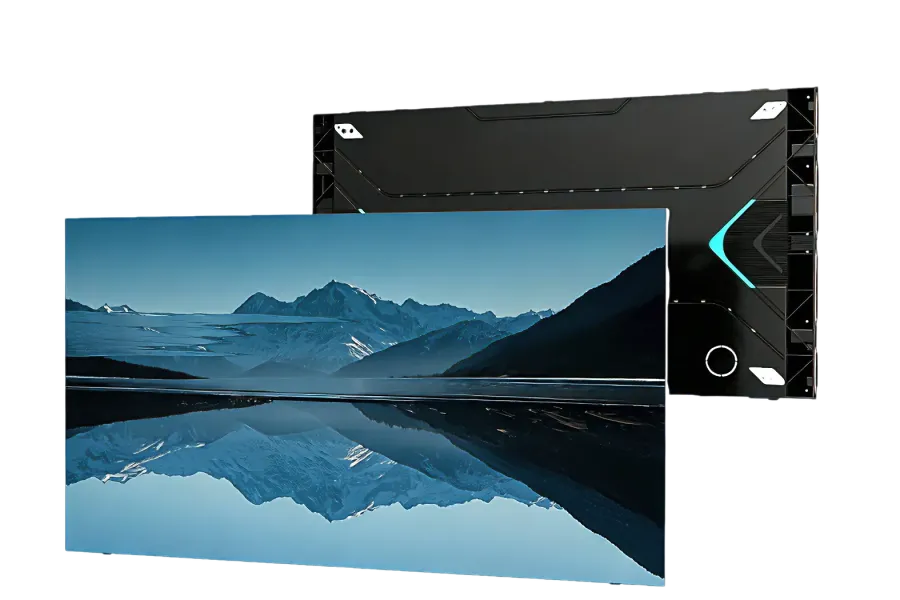
- Control rooms, broadcast studios, boardrooms, luxury retail. Viewers sit close and read detailed content — dashboards, maps, fine text. This is fine-pitch territory: tight pixel spacing so the wall stays sharp at conversational distance. See the HD wall range.
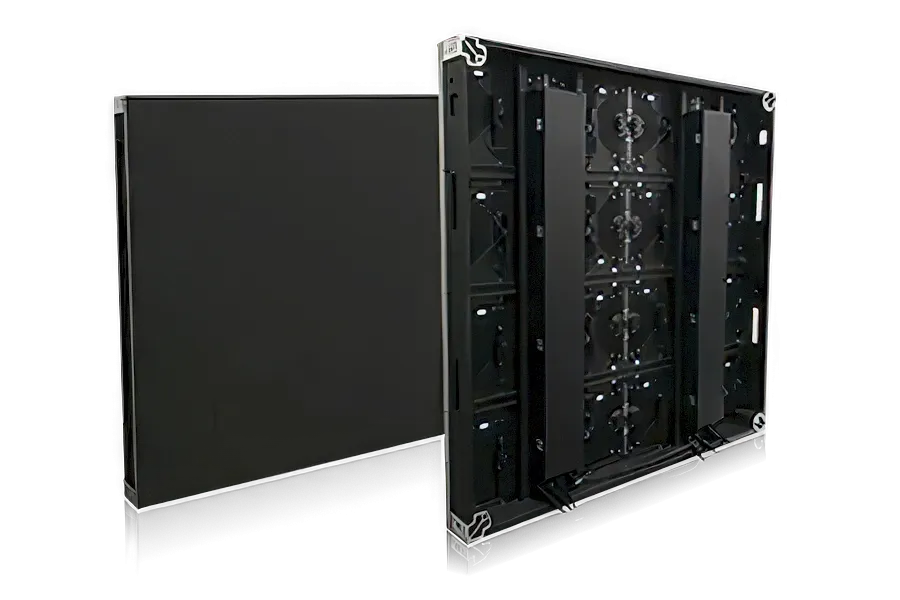
- Retail storefronts, corporate lobbies, hospitality. Viewers stand a few metres back. A mid-range indoor pitch balances image quality against cost per square metre. See the indoor range.
- Billboards, building facades, stadiums, public plazas. Viewers are tens of metres away, often in daylight. A coarser outdoor pitch keeps cost and power sensible while staying sharp at the distance that matters — and the panel is rated to 6,000 nits to fight direct sun. See the outdoor range.
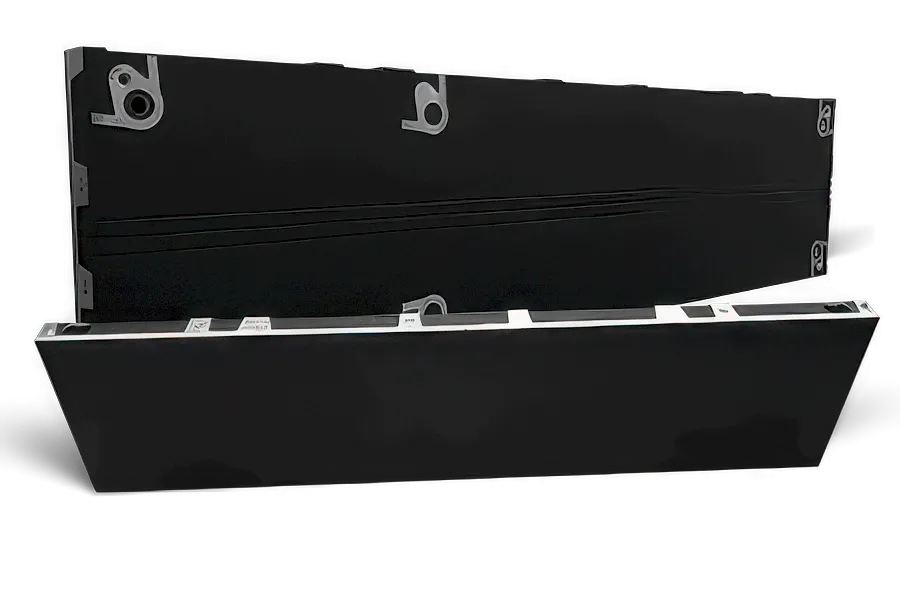
- Touring shows, conferences, exhibitions. The audience distance changes per venue, so rental pitch is chosen against the most common stage-to-front-row distance for the act. See the rental range.
Pixel Pitch Is Not the Whole Spec
A finer pitch sharpens the image, but it does not fix a screen that is too dim for the room or too coarse for the content. Three other numbers ride alongside pitch on every spec sheet:
- Brightness (nits). A storefront behind glass in direct sun needs far more output than a dim control room. Pitch and brightness are specified together, not in isolation.
- Viewing distance range. Every install has a closest viewer and a furthest viewer. Pitch is chosen for the closest one; brightness and content are tuned for the rest.
- Content type. Fine text and data visualisation reward a tighter pitch. Large-format brand video tolerates a coarser one. The content brief belongs in the pitch conversation from the start.
Pitch, brightness, and viewing distance are read together off the downloadable datasheets for each family.
How ARECH Specs It for You
ARECH builds all five families — indoor, outdoor, flexible, HD wall, and rental — off one production line, so the pitch recommendation is not steered toward whatever happens to be in stock. The engineering team starts from the venue, the closest viewer, the ambient light, and the content brief, then matches the pitch to the brief rather than the other way around.
Send the room dimensions, the typical viewing distance, and a note on what will play on the screen. The engineer who reviews that first brief stays on the project through commissioning and into the warranty period — so the pitch decision is owned by someone who sees it through.
CONTINUE READING
More from the blog
-
How ARECH's LED Display Warranty Works: 2 or 3 Years, and What Decides It
How ARECH's LED Display Warranty Works: why the term is 2 or 3 years depending on the LED chip, what is excluded, and…
-
Inside the Ageing Chamber: Every Cabinet is tested
Inside the Ageing Chamber: Every ARECH LED cabinet runs an ageing-chamber burn-in cycle before pack-out.
-

Curved and Flexible LED: How It Bends and Where It Fits
Curved and Flexible LED: How bend into columns, domes, and sculptural shapes, why magnetic mounting makes them…
-

What ARECH's LED Display Certifications Mean: CE, FCC, RoHS, ISO 9001, LVD
What ARECH's LED Display Certifications Mean: CE, FCC, RoHS, and ISO 9001, LVD certification each cover on an LED…
-

Indoor vs Outdoor LED Displays: How to Choose the Right One
Indoor vs Outdoor LED Displays: differ in brightness, weatherproofing, pixel pitch, and cabinet build. Here is how to…
-

Inside the ARECH Factory: One Line, Five Product Families
Inside the ARECH Factory: We builds indoor, outdoor, flexible, HD wall, and rental LED displays on one integrated line…