
What ARECH's LED Display Certifications Mean: CE, FCC, RoHS, ISO 9001, LVD
What ARECH's LED Display Certifications Mean: CE, FCC, RoHS, and ISO 9001, LVD certification each cover on an LED display, why the certificates travel with every shipment, and how that clears customs without delay.
What ARECH's LED Display Certifications Mean: Four certifications, four separate jobs. Each one answers a different question a buyer, an installer, or a customs officer is going to ask. Here is what each covers — and why the papers travel with every cabinet rather than sitting in a drawer at the factory.
Four Marks, Four Different Jobs
A certification mark on an LED display is shorthand for a specific test against a specific standard. The four ARECH carries on every product line do not overlap — each one covers ground the others do not.
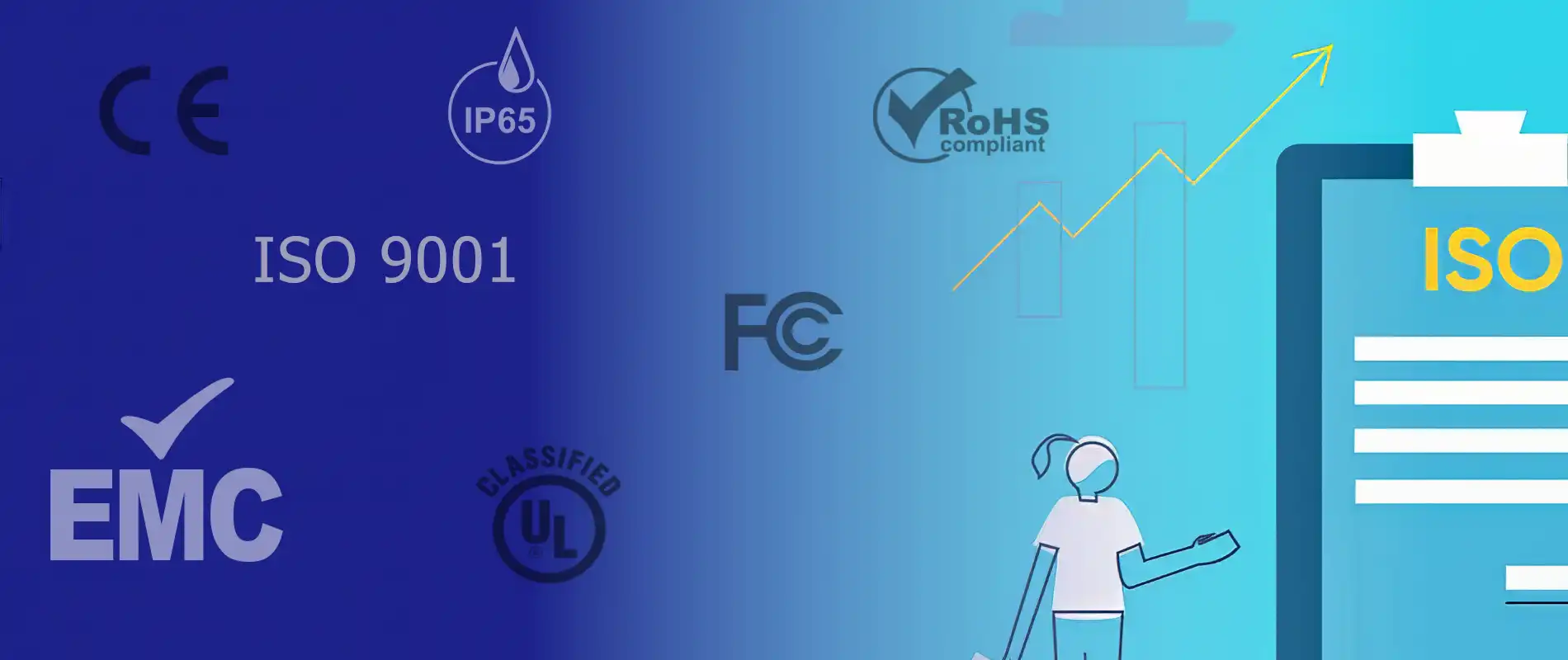
- CE is the European conformity mark. It says the product meets EU health, safety, and environmental-protection requirements and may be sold across the European Economic Area.
- FCC is the United States Federal Communications Commission mark. It confirms the electromagnetic interference the device emits stays inside US limits — so the screen does not disrupt nearby radio and communications equipment.
- RoHS restricts hazardous substances. It limits the lead, mercury, cadmium, and other regulated materials allowed in the electronics — relevant to safe handling and to end-of-life disposal.
- ISO covers the quality-management system behind the product — the documented procedures that keep one batch behaving like the next.
Read together, they say the product is safe to operate, legal to sell in the major markets, clean on regulated substances, and built under a controlled process.
CE: Legal to Sell in Europe
The CE mark is not a quality grade — it is a declaration that the product meets the EU directives that apply to it: electrical safety, electromagnetic compatibility, and the relevant environmental rules. For an LED display headed to a European install, CE is the difference between cargo that clears and cargo that gets held.
FCC: Clean Radio Behaviour in the US
Every powered electronic device radiates some electromagnetic energy. The FCC mark confirms an LED display keeps that emission within the limits the US sets, so a wall installed near broadcast, aviation, or communications infrastructure does not interfere with it. For any project shipping into the United States, FCC is the equivalent gatekeeper that CE is for Europe.
RoHS: What Is Inside the Hardware
RoHS — Restriction of Hazardous Substances — caps the amount of regulated materials such as lead and mercury permitted in the electronics. It matters on two fronts: safe handling for the people who install and service the panels, and responsible disposal at the far end of the product's service life. A panel rated for 100,000+ operating hours eventually comes down, and RoHS compliance is what keeps that end-of-life step clean.
ISO: The Process Behind the Product
CE, FCC, and RoHS certify the product. ISO certifies the system that builds it. An ISO quality-management certification means the factory runs documented procedures — for component sourcing, for the six-stage production line, for the tolerance bands checked at every station — and audits itself against them. That is the reason a cabinet ordered this year behaves like one ordered last year: the bill of materials and the procedure do not drift between batches. More on that discipline on the factory page.
Why the Papers Ship With the Cabinets
A certificate that stays at the factory does the customer no good at the border. At ARECH, the packout team includes the CE, FCC, RoHS, and ISO conformity documents — alongside HS codes, export paperwork, and the cabinet's calibration report — inside the consignment. The point is practical: a commercial shipment clears customs without the back-and-forth that holds cargo in a bonded warehouse while documents get chased.
Certification is also not a one-time milestone. It is a continuous audit cycle the factory runs against external standards bodies, so the marks stay valid across the product line rather than lapsing between renewals.
Verifying a Supplier's Certifications
If you are evaluating any LED display supplier — ARECH included — ask for the certificates against the specific models you intend to buy, and confirm they are current. A serious manufacturer hands them over without friction. ARECH will send the conformity documents for any model on request, and the engineering team can walk through which standard applies to your destination market.
CONTINUE READING
More from the blog
-
How ARECH's LED Display Warranty Works: 2 or 3 Years, and What Decides It
How ARECH's LED Display Warranty Works: why the term is 2 or 3 years depending on the LED chip, what is excluded, and…
-
Inside the Ageing Chamber: Every Cabinet is tested
Inside the Ageing Chamber: Every ARECH LED cabinet runs an ageing-chamber burn-in cycle before pack-out.
-

Curved and Flexible LED: How It Bends and Where It Fits
Curved and Flexible LED: How bend into columns, domes, and sculptural shapes, why magnetic mounting makes them…
-

Indoor vs Outdoor LED Displays: How to Choose the Right One
Indoor vs Outdoor LED Displays: differ in brightness, weatherproofing, pixel pitch, and cabinet build. Here is how to…
-

Pixel Pitch Explained: Matching an LED Display to Viewing Distance
Pixel Pitch Explained - What pixel pitch means, how it sets minimum viewing distance, and how to pick the right LED…
-

Inside the ARECH Factory: One Line, Five Product Families
Inside the ARECH Factory: We builds indoor, outdoor, flexible, HD wall, and rental LED displays on one integrated line…