
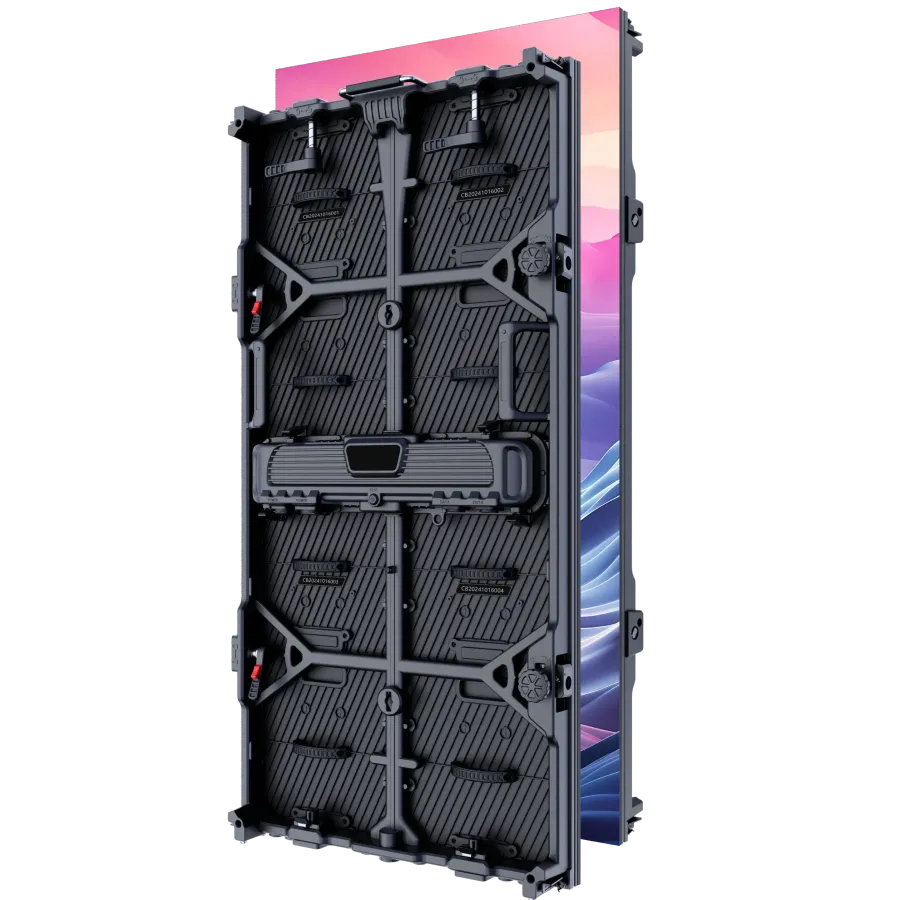
Fine-Pitch HD Walls: Choosing P0.9–P1.5 for Control Rooms, Studios and Boardrooms
How to spec a fine-pitch LED HD wall for control rooms, broadcast studios and boardrooms — pixel pitch, cabinet sizes, zero-seam construction, contrast and 24/7 reliability.
Fine-pitch LED walls exist to solve one problem: a room where viewers sit close and need the image to hold together at that distance. Control rooms, broadcast studios, emergency response hubs, and executive meeting spaces all fit that description. The pixel pitch, the cabinet construction, and how the wall handles contrast at close range are the three things that separate a specification that works from one that disappoints on day one.
What "Fine-Pitch" Actually Means for This Application
The pixel pitch article on this blog covers the general pitch-to-distance rule. This article is narrower: it is about fine-pitch LED walls — pitches from P0.9 into the low P1 range — and specifically about the rooms that need them.
At P0.9, a single square metre of panel carries up to 1.2 million pixels. That density is what lets a viewer stand a metre away from the wall and still read text clearly without the image breaking into visible dots. A P0.9 or P1.25 display looks sharp at the distances that are normal in a control room or studio — distances where a P2.5 or P4 panel would show its pixel structure and become distracting to work with for hours at a stretch.
This is not a pitch for everyone. Fine-pitch panels cost more per square metre than mid-range indoor panels, and they are wasted on rooms where the closest viewer sits four or five metres back. The question is simple: how close is the nearest person who needs to read content accurately? If the answer is under two metres, fine-pitch is the correct family.
The Rooms That Drive Fine-Pitch Demand
Three categories of professional space account for most fine-pitch HD wall installations.
Control rooms and command centres. Operators sit in fixed positions — typically 1–2 metres from a large display array — and read data continuously: maps, dashboards, camera feeds, alert states. Any visible pixel structure competes with that content. Control rooms also run around the clock, so the panel needs to hold up under continuous 24/7 operation with industrial-grade components and thermal management built in.
Broadcast studios. Camera angles that point directly at the wall are common. On a broadcast shoot, the talent stands close to the LED backdrop, and the camera may be only a few metres further back. A coarse-pitch panel shows moiré patterns or visible pixels on-camera long before a human eye would notice them. A P0.9 or P1.25 panel removes that problem cleanly.
Executive meeting rooms and design studios. A boardroom table typically puts viewers 2–4 metres from a wall-mounted display. At that distance, a fine-pitch wall running 4K or even 8K content stays sharp and holds a 16:9 composition without reformatting. Government facilities and high-end design studios have the same requirement: close-range legibility across a wide colour gamut, with content that includes fine detail.
See the HD wall range on ARECH.com for the full spec sheets on these applications.
Cabinet Construction: Why the Physical Join Matters
Pixel pitch decides only half the image quality of a fine-pitch LED wall. At close viewing distances, the cabinet join matters just as much.
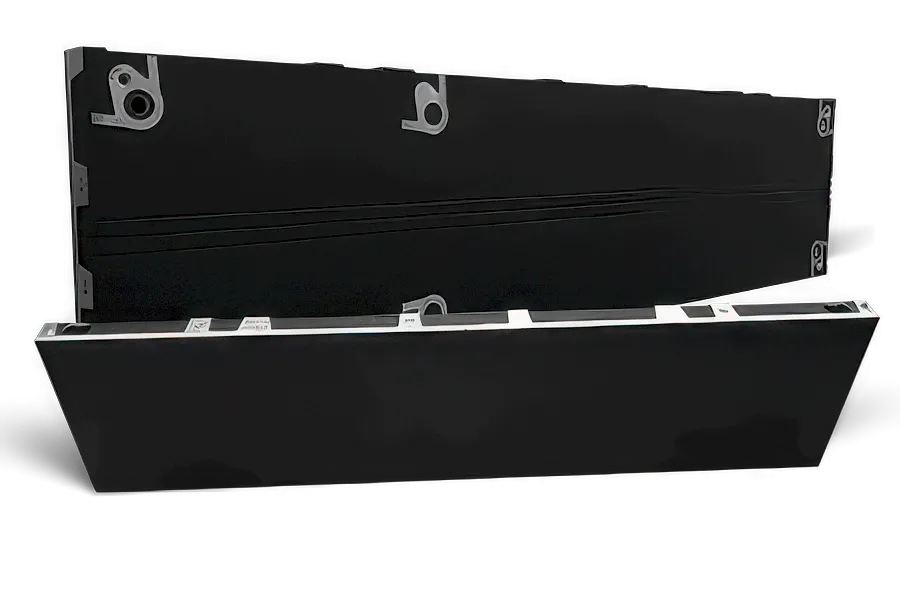
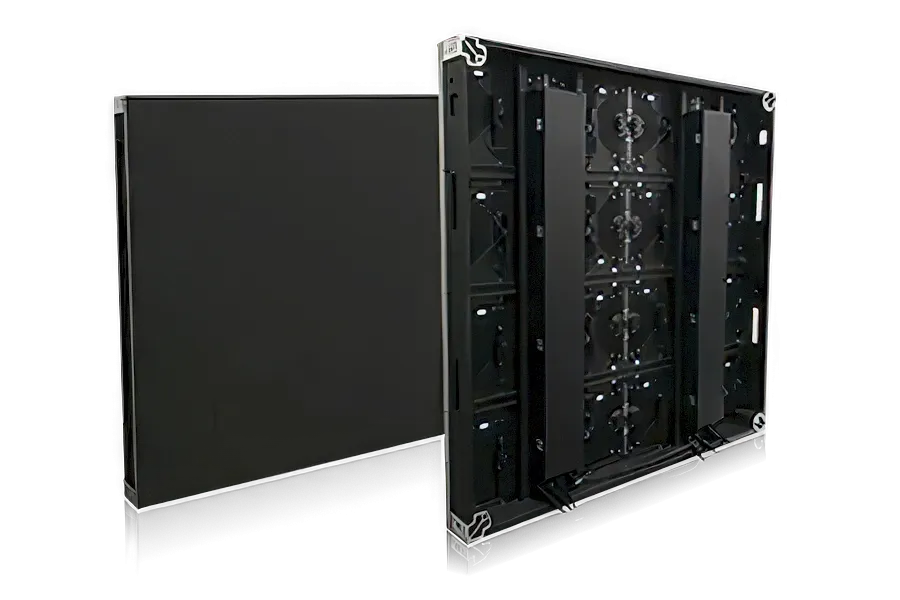
Conventional LED modules leave a 3–5 mm gap between adjacent cabinets. At close range, those gaps read as a grid overlaid on the image — the eye catches the joints even when the content is good. ARECH fine-pitch walls use precision CNC-machined cabinet frames, which brings those joins together to produce zero visible seams across the full assembly. At short viewing distances, this difference is immediately apparent: the image reads as a single continuous surface rather than a tiled panel.
Cabinet dimensions for fine-pitch HD walls are chosen to tile cleanly at standard resolution targets. Common sizes include 600 × 337.5 mm (which tiles at 16:9 natively), 640 × 480 mm, 480 × 480 mm, 600 × 320 mm, and 400 × 300 mm. The right cabinet size for a given room depends on the total wall dimensions, the target resolution, and the mounting method — flat wall, angled array, or curved. The engineering team works through that combination before any cabinet is cut.
Contrast and Colour at Close Range
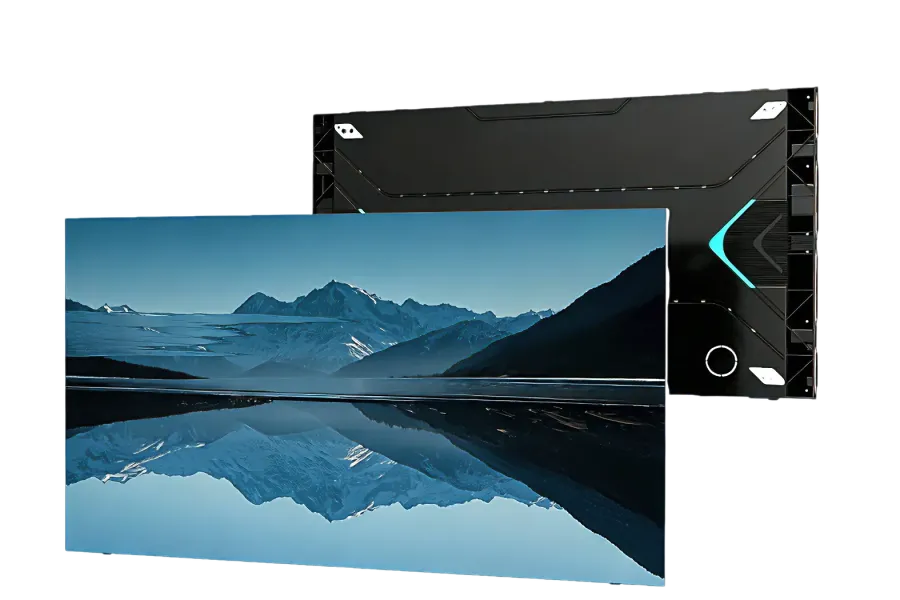
LED displays produce contrast differently from LCD or projection technologies. Each LED pixel is independently controlled — it can be at full brightness, completely off, or anywhere between. There is no backlight bleeding through a filter. The result is what manufacturers call true pixel-level control: a bright area and a dark area on the same panel at the same moment, with each pixel doing exactly what the signal tells it to do.
In a control room or studio environment, this matters practically. Dashboards mix bright alert indicators with dark backgrounds. Broadcast backdrops mix vivid colour with dark-sky and shadow areas in the same frame. An independent-pixel LED wall renders both accurately at once, holding deep blacks alongside bright highlights without the bloom that appears on panel technologies with shared backlights.
Fine-pitch panels also cover a wider colour gamut than most display technologies, which matters for design studios and colour-grading environments where gamut coverage is part of the technical specification. Resolution support — Full HD, 4K, and 8K — is available at the panel level; the signal chain and processing unit determine which tier the installation runs at.
24/7 Reliability and What It Requires
Control rooms do not turn off. Emergency response hubs run continuously. A broadcast studio may run a panel through multiple consecutive production days without a rest period.
Fine-pitch LED walls built for these environments use industrial-grade internal components rather than components rated for consumer display cycles. Thermal management — airflow design, heat dissipation across the cabinet frame — is part of the engineering, not an afterthought. The result is a panel that handles continuous duty without colour drift or brightness degradation over the operating period.
Power efficiency is also a practical factor: fine-pitch panels in this class draw less power and produce less heat than older LED generations at comparable brightness levels, which reduces HVAC load in sealed control rooms where heat is already a concern.
How to Spec the Right Fine-Pitch Wall
Five inputs let the engineering team return a recommendation worth acting on:
- Room dimensions and seating layout. Total wall width and height, plus the distance from the nearest seated viewer to the panel surface.
- Content type. Data dashboards, broadcast, video conferencing, design review — each has different resolution and colour-accuracy requirements.
- Operating schedule. Continuous 24/7 or standard business hours changes the component specification and the thermal design target.
- Mounting constraints. Flat wall, angled array, curved configuration, or a free-standing structure.
- Signal and processing. Whether the facility already has a video processing unit or needs one as part of the supply.
Send those details and the team returns a cabinet size, pixel pitch, and configuration recommendation before any commercial conversation starts. The HD wall product page includes downloadable datasheets for the current fine-pitch families. If you are also evaluating the broader indoor range, the indoor LED screen page covers mid-range pitches for rooms where viewers stand further back.
CONTINUE READING
More from the blog
-
How ARECH's LED Display Warranty Works: 2 or 3 Years, and What Decides It
How ARECH's LED Display Warranty Works: why the term is 2 or 3 years depending on the LED chip, what is excluded, and…
-
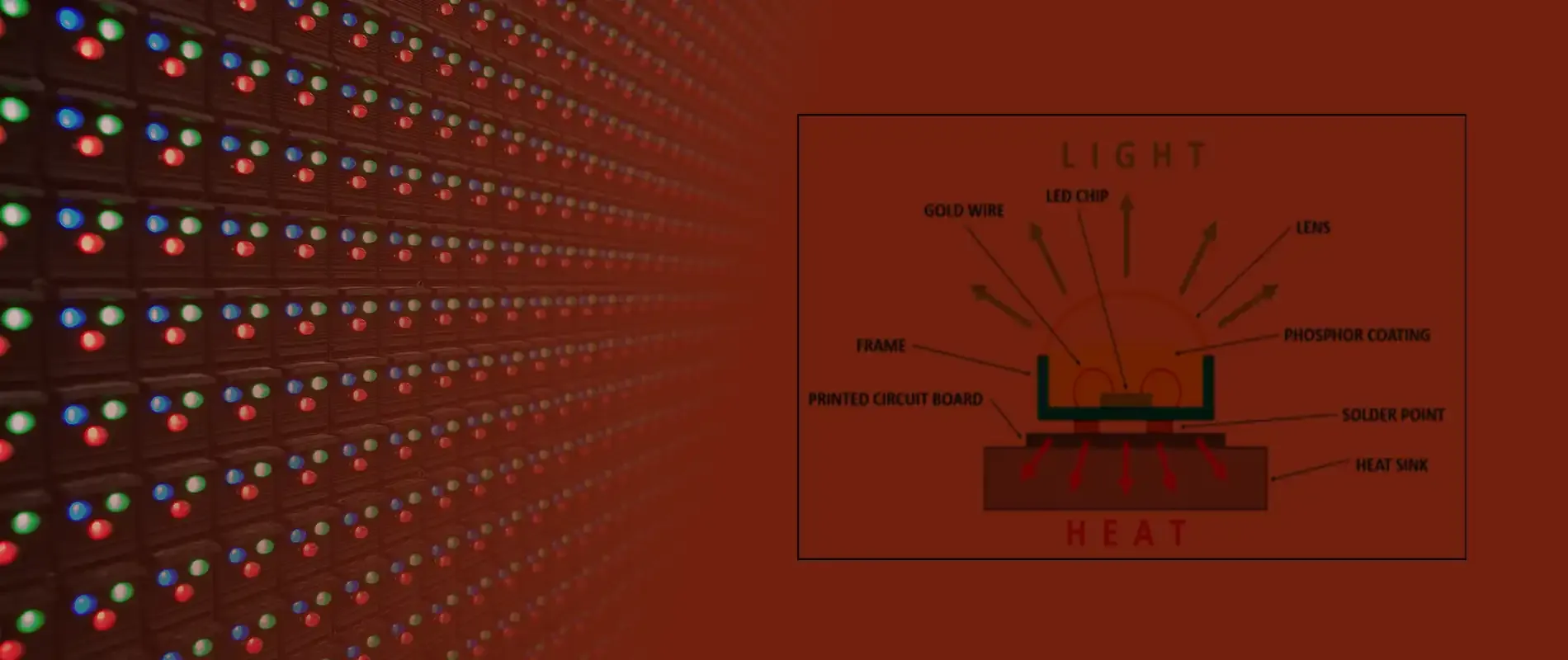
Inside the Ageing Chamber: Every Cabinet is tested
Inside the Ageing Chamber: Every ARECH LED cabinet runs an ageing-chamber burn-in cycle before pack-out.
-

Curved and Flexible LED: How It Bends and Where It Fits
Curved and Flexible LED: How bend into columns, domes, and sculptural shapes, why magnetic mounting makes them…
-

What ARECH's LED Display Certifications Mean: CE, FCC, RoHS, ISO 9001, LVD
What ARECH's LED Display Certifications Mean: CE, FCC, RoHS, and ISO 9001, LVD certification each cover on an LED…
-

Indoor vs Outdoor LED Displays: How to Choose the Right One
Indoor vs Outdoor LED Displays: differ in brightness, weatherproofing, pixel pitch, and cabinet build. Here is how to…
-

Pixel Pitch Explained: Matching an LED Display to Viewing Distance
Pixel Pitch Explained - What pixel pitch means, how it sets minimum viewing distance, and how to pick the right LED…