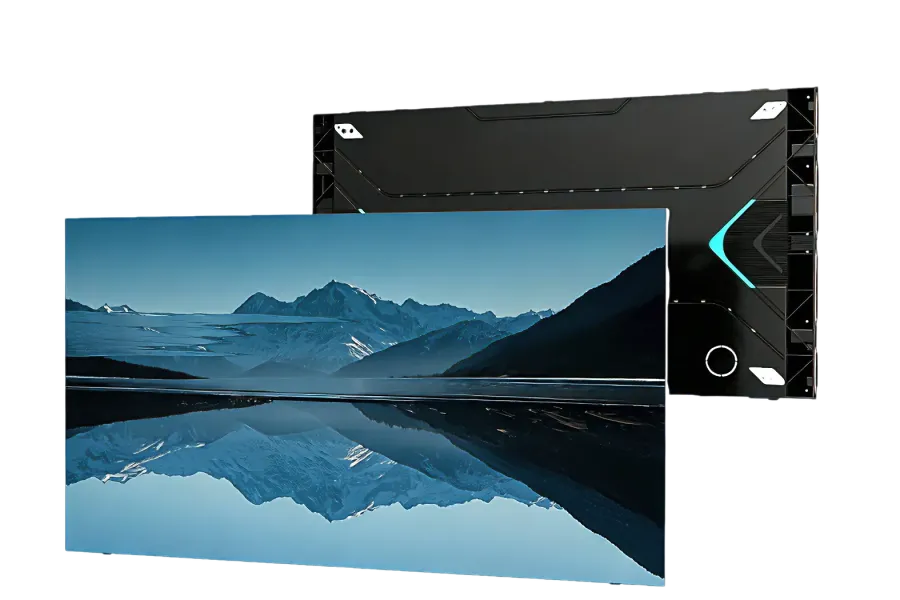
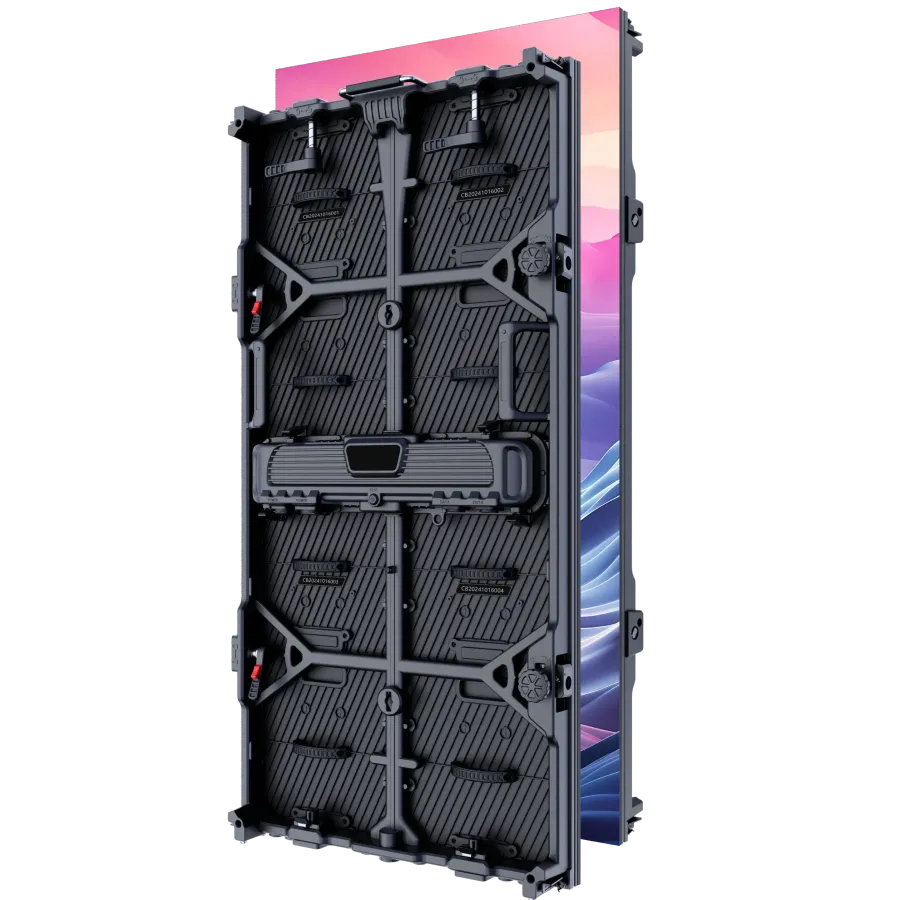
Rental and Staging LED: What Makes a Touring Screen Survive the Road
What separates a real rental LED screen from a fixed-install panel — cabinet weight, quick-lock assembly, front-serviceable modules, refresh rate for broadcast cameras, and when to buy vs rent.
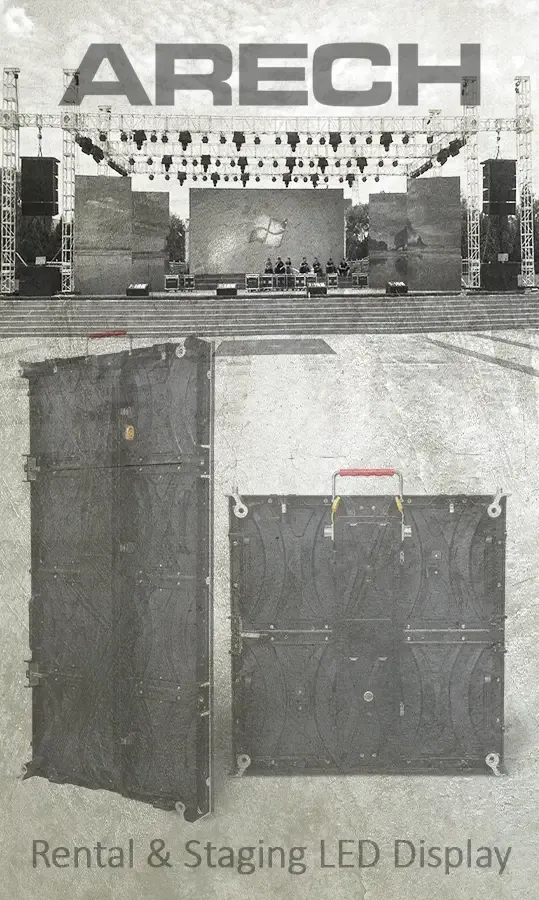
A rental LED screen lives a different life from a fixed install. It gets bolted together at noon, runs a concert that night, breaks down at 2 AM, and goes into a truck. Do that 200 times a year and the wrong cabinet design shows its weaknesses fast. Here is what separates a panel built for the road from one that simply looks the part on a spec sheet.
The Weight Problem Is Real
Every kilogram you add to a cabinet multiplies across a 200-square-metre main stage. A crew that finishes load-in with energy left to actually commission the screen has a real advantage, not a marketing line.
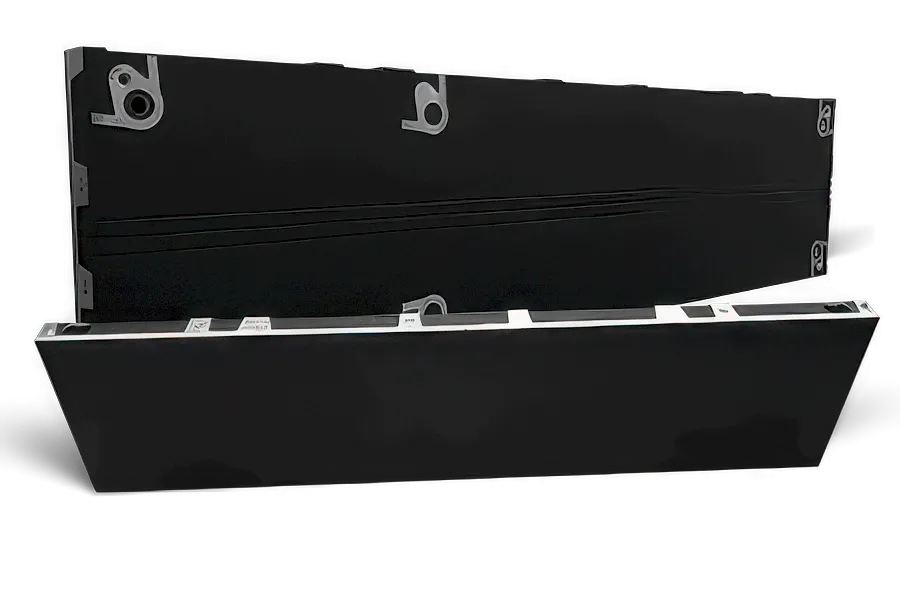
ARECH's rental cabinets are built from a custom magnesium alloy. Magnesium sits notably lighter than the aluminium used in most touring panels while matching it in structural strength. On paper the difference per cabinet looks modest. Across a full touring rig it changes what the crew can do in the time they have.
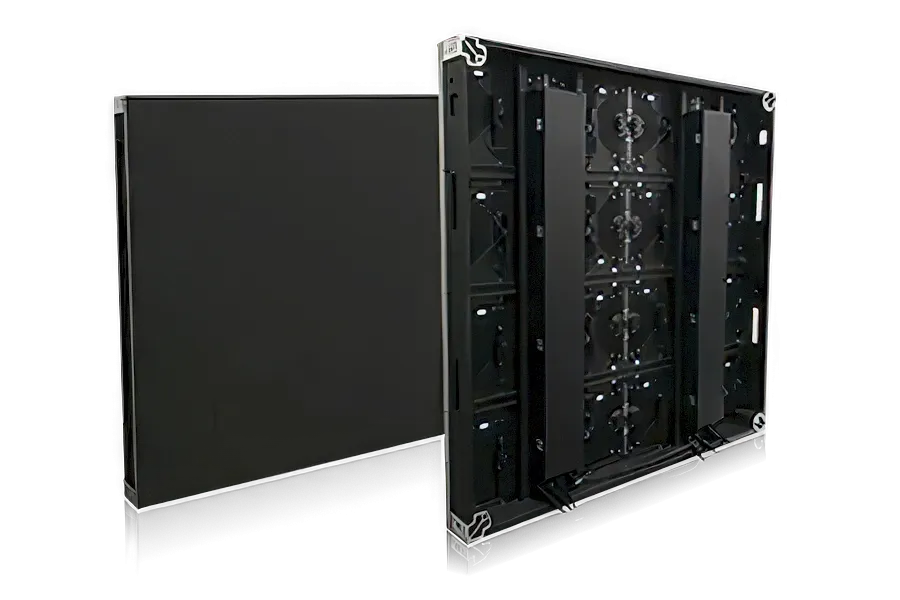
The standard cabinet sizes — 500×500mm, 500×750mm, and 500×1000mm — are sized for the most common staging grids. You can mix them in a single build for a custom aspect ratio or an irregular opening.
How the Assembly Actually Works
Speed matters on a load-in schedule. ARECH's quick-lock system joins two cabinets in seconds; one technician can work through a standard configuration without waiting for a second pair of hands. The locking mechanism is tool-free throughout: no hex keys, no loose hardware to lose on a dark stage.
Those locks are also built to last. The quick-fix system is rated for thousands of assembly and disassembly cycles, which matters when a screen moves between twenty venues in a month rather than sitting on one wall for five years. Reinforced corners with hardened steel inserts carry the impact loads that come with road use, flight cases, and the occasional hard dock.
For the flight case itself: ARECH's road kit ships with stackable cases, flexible wheels, and high-density foam cut for the cabinets. Standard touring logistics.
Front Service at 3 AM
A pixel failure mid-tour has two possible endings: a dark patch that the broadcast director notices, or a module swap that nobody remembers happened.
ARECH's rental panels are front-serviceable. The LED modules attach magnetically and pull free from the front of the cabinet without any tools. A trained technician can swap a module in under 30 seconds. Power stays on throughout: no shutdown required, no waiting for the rest of the wall to cool.
That is the practical test of "serviceable" for touring: not whether it can be serviced in a workshop, but whether one person can fix it in the dark, from the front, with the show running.
Refresh Rate and the Camera Problem
A rental LED screen at a concert tour or sports broadcast is not just seen by the audience in the room. Cameras are pointed at it: broadcast rigs, phones, and DSLRs, all running at shutter speeds that expose refresh flicker on panels not specced for it.
ARECH's rental screens run an adjustable refresh rate of 3840Hz to 7680Hz. At 3840Hz you eliminate the visible flicker and motion blur a human eye detects at close range. At 7680Hz the frame rate is high enough that even a fast broadcast shutter captures a complete, even image with no banding.
Pixel pitch for the rental line runs from P1.5mm through P1.9mm, P2.6mm, P2.9mm, and up to P4.8mm. The right pick depends on the closest camera position and the viewing distance from the front row. For a television studio or XR stage where cameras sit close, P1.5 or P1.9 is the correct call. For a festival main stage where cameras are further back, P2.9 or P4.8 keeps cost in check without sacrificing the image.
The display also delivers 16-bit contrast, which preserves detail in shadow areas on dark stage backgrounds. That matters for both the live audience and the broadcast output.
Custom Shapes and Configuration Options
Not every venue gives you a flat rectangular opening. ARECH builds rental screens in curved, circular, cube, and geometric configurations. Corner right-angle and curve splicing let you match irregular set designs or wrap screens around scenic elements. The video-processing side handles the geometry; the cabinets are built for it.
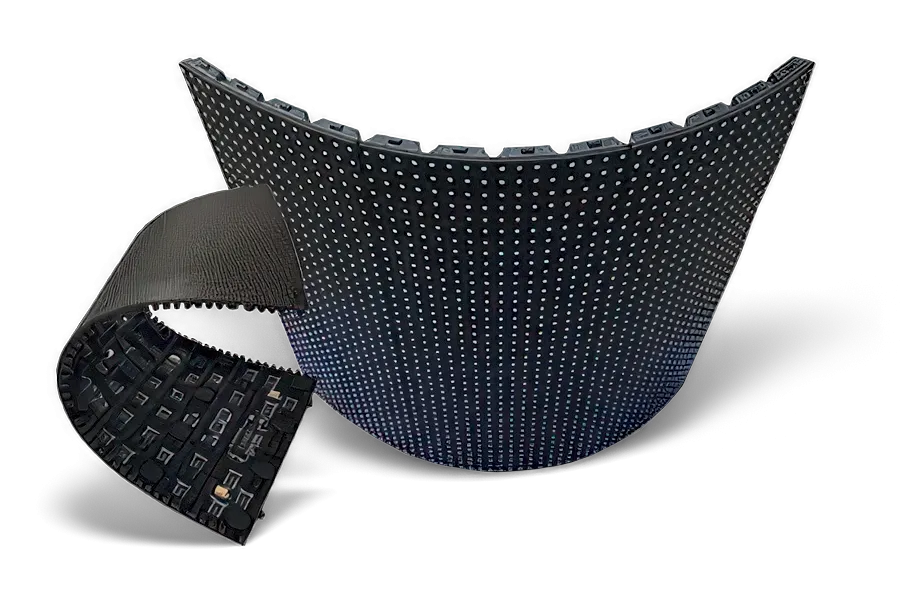
This is also where the flexible LED line overlaps with rental use — for very tight curves or unusual formats where a rigid cabinet cannot bend enough.
Buy vs Rent: The Practical Decision
If you run 50-plus event days a year with a screen you control, buying makes the economics work. You amortise the hardware cost, keep the asset, and are not subject to third-party availability. A production company building a touring rig for a major act will almost always own its screens.
If you produce events occasionally — a handful of launches or conferences per year — renting from a local AV house is almost always cheaper than owning hardware that sits in storage between events. The depreciation, storage, maintenance, and crew costs do not disappear because you own the asset.
The middle case is where it gets specific to the job: an agency that runs 20-30 events per year, mixed sizes, should model actual hire costs against a purchase over three years. That math changes depending on screen size, local rental rates, and whether you have crew available to operate it. If you want to run that calculation, send ARECH the brief. The application engineering team works through the numbers with buyers regularly.
CONTINUE READING
More from the blog
-
How ARECH's LED Display Warranty Works: 2 or 3 Years, and What Decides It
How ARECH's LED Display Warranty Works: why the term is 2 or 3 years depending on the LED chip, what is excluded, and…
-
Inside the Ageing Chamber: Every Cabinet is tested
Inside the Ageing Chamber: Every ARECH LED cabinet runs an ageing-chamber burn-in cycle before pack-out.
-

Curved and Flexible LED: How It Bends and Where It Fits
Curved and Flexible LED: How bend into columns, domes, and sculptural shapes, why magnetic mounting makes them…
-

What ARECH's LED Display Certifications Mean: CE, FCC, RoHS, ISO 9001, LVD
What ARECH's LED Display Certifications Mean: CE, FCC, RoHS, and ISO 9001, LVD certification each cover on an LED…
-

Indoor vs Outdoor LED Displays: How to Choose the Right One
Indoor vs Outdoor LED Displays: differ in brightness, weatherproofing, pixel pitch, and cabinet build. Here is how to…
-

Pixel Pitch Explained: Matching an LED Display to Viewing Distance
Pixel Pitch Explained - What pixel pitch means, how it sets minimum viewing distance, and how to pick the right LED…