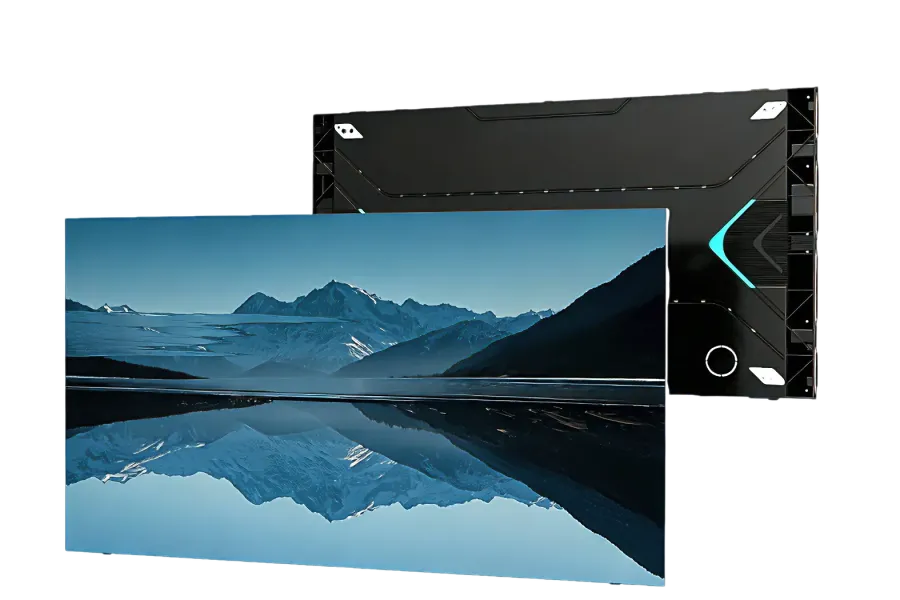
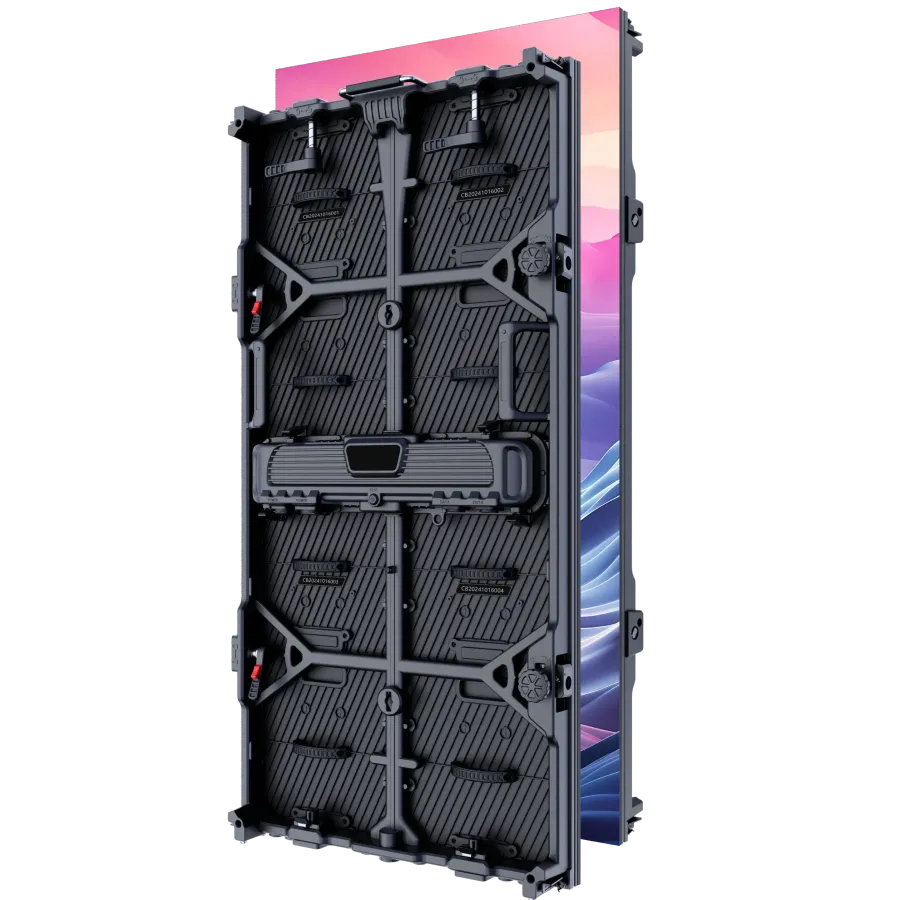

Custom-Shaped LED: When a Standard Cabinet Will Not Fit
Custom-Shaped: How bespoke LED cabinets are specified, designed, and built for non-standard sizes, irregular shapes, and corner pieces — plus how to brief a custom project.
Custom-Shaped - Standard LED cabinets are rectangles that tile into bigger rectangles. That covers a conference room or a billboard. It falls apart the moment your site has a curved facade, a concave corner, a triangular recess, or a structural column planted in the middle of your viewing wall. Now the question is no longer which stock product to order. It is whether to go fully custom-built, and how to brief that project so it does not run off the rails.
Why Standard Cabinets Hit a Wall
A standard LED cabinet is a rectangular module, designed to butt up against other identical rectangular modules. That constraint serves the majority of installs well. It is cost-efficient, lead times are predictable, and replacement parts are stock items.
The limit shows up fast in a handful of situations:
- Non-rectangular architecture. Arched facades, sloped ceilings, cylindrical columns — rectangles do not tile cleanly onto curved planes.
- Corner junctions. Two flat walls meeting at an angle each need a cabinet face that is neither parallel to the other. A standard module cannot cover that joint without an ugly visible seam or a gap.
- Forced odd dimensions. A recess that is 1,840mm wide does not accept standard 500mm-wide cabinets without a strip of dead wall on one side. Custom lets you hit the dimension exactly.
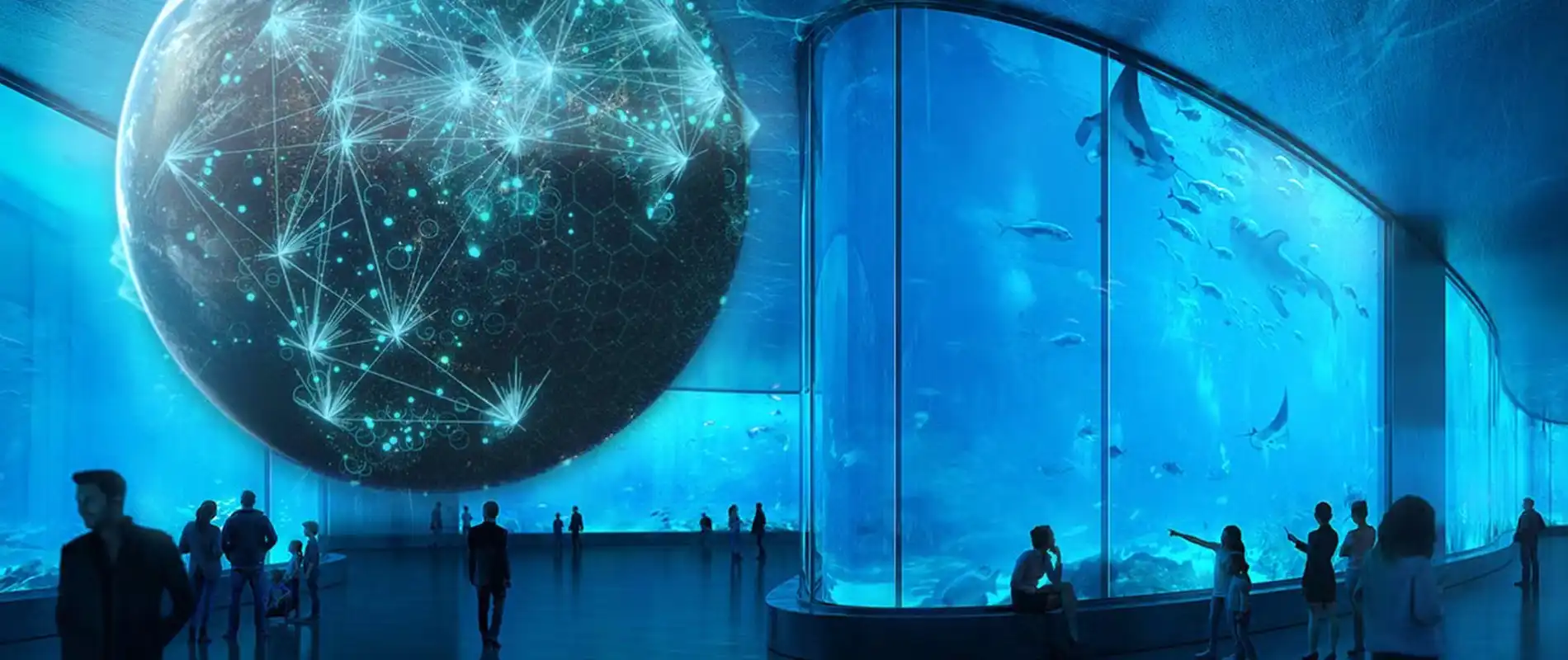
- Artistic or branded shapes. TV broadcast sets, shopping mall centrepieces, and landmark building features often call for triangles, ribbons, concave bowls, or convex domes that have no off-the-shelf equivalent.
If any of those apply to your site, you are looking at a custom build.
What "Custom-Shaped" Actually Covers
The custom LED vocabulary spans a wider range than most buyers expect. In practice, "custom-shaped" means any of the following:
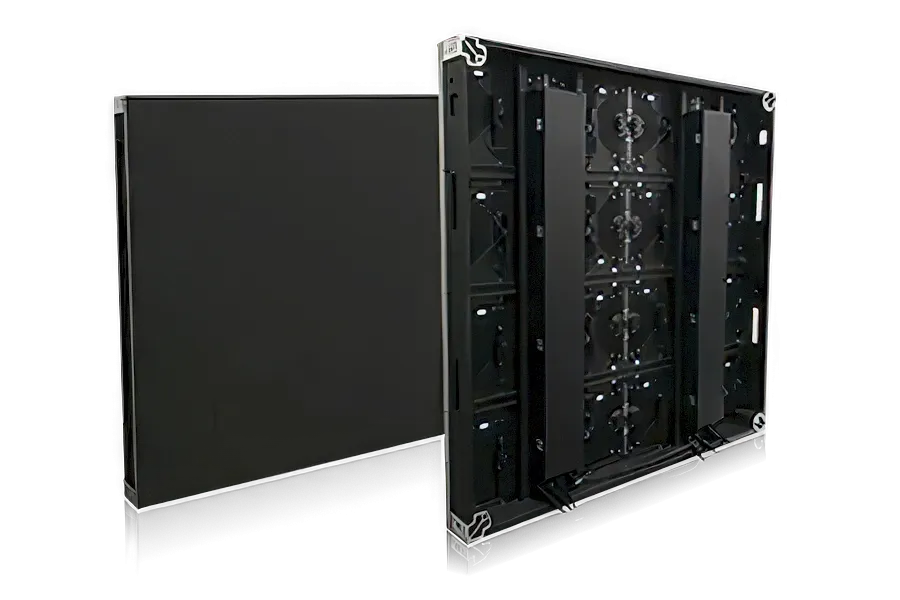
- Bespoke cabinet dimensions. Same technology as a standard product, but the cabinet is cut or assembled to a non-standard width or height. This is the most common custom request, and the least expensive.
- Concave and convex curves. Individual modules are angled relative to each other, with purpose-built aluminium framing that holds the curve radius accurately. The LED surface curves; the individual module faces remain flat.
- Corner pieces. A cabinet that wraps around a 90-degree or non-standard-angle corner — one module face per wall plane, joined at the edge, with continuous pixel mapping across the corner so content does not split.
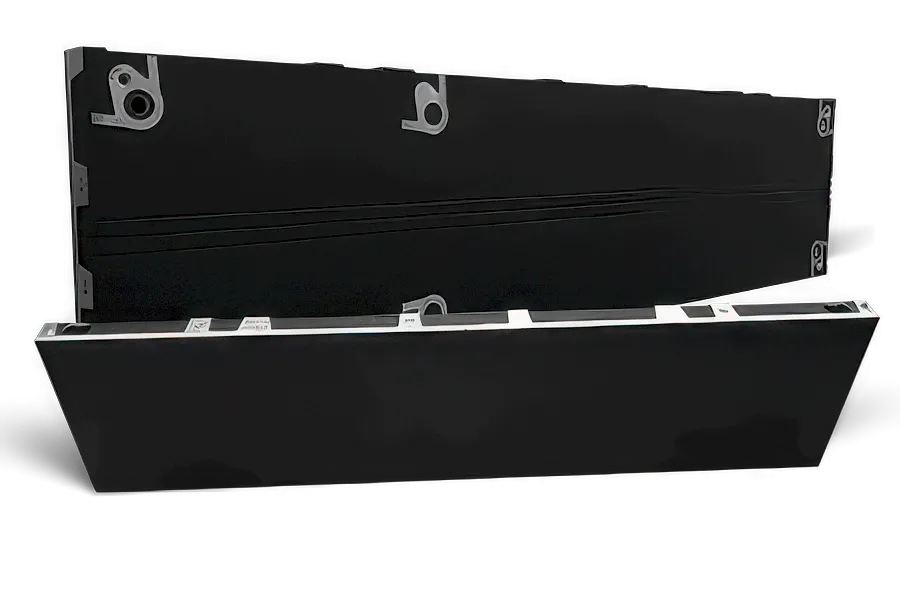
- Triangles, ribbons, and irregular outlines. The cabinet outline itself is non-rectangular. Structural design has to account for both the load-bearing frame and the pixel layout within the irregular boundary.
- Complex artistic assemblies. Multiple shape types combined — a concave bowl flanked by angled wings, for example, or a ribbon that spirals around a column.
Each of these requires progressively more engineering work. A cabinet sized to a non-standard dimension is straightforward. A spiralling ribbon around a column is a structural and optical design project.
Rigid Custom vs. Flexible Panels
Before the engineering brief starts, there is one fork in the road: rigid custom-built cabinets or flexible LED panels.
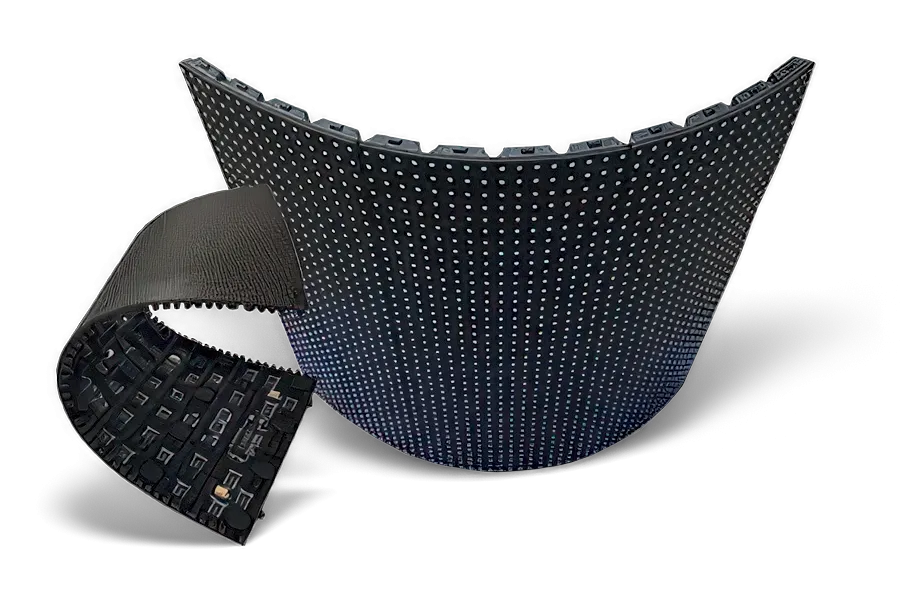
Flexible LED uses a soft substrate rather than an aluminium frame. It bends to a tighter radius and handles compound curves — surfaces that curve in more than one direction at once. If your shape is a sphere segment, a wave, or anything that curves in two axes, flexible LED panels are usually the right answer. They are also lighter per square metre, which matters on ceiling installs.
Rigid custom cabinets are better where structural rigidity is needed — outdoor facades, large indoor walls, floor-to-ceiling fixed installs. They are built to hold their geometry precisely over years of thermal cycling and physical load. Splicing precision across cabinet joints is tighter with rigid frames, which matters when content crosses a seam.
A good way to think about it: if the shape can be described as a series of flat faces meeting at angles, or a single-axis curve with a radius of more than roughly 1 metre, rigid custom is the likely choice. If the surface curves in multiple directions or the radius is tight, start from the flexible range.
Content and Canvas Mapping
A custom shape raises a question that a rectangular screen never does: how does content fill the canvas?
On a standard rectangle, the answer is obvious — the video signal maps to the pixel grid one-to-one. On an L-shaped screen wrapping a corner, or a triangular panel flanked by two horizontal strips, the media server and the LED controller need to know the exact pixel layout of the assembled shape so they can address each section correctly.
This is called pixel mapping or canvas mapping: defining where in the overall image each cabinet sits, and how content flows across the seams. A buyer does not have to solve it. The engineering team produces this map as part of the custom design. It does, however, affect the content side. Your motion graphics team or content supplier needs the final pixel dimensions and the canvas shape before they build assets. Getting that brief out early saves expensive rework later.
Ask for the pixel map document as a deliverable from the manufacturer before production starts. It doubles as a QC check: if the installed screen does not match the map, the installation is not accepted.
The Three-Stage Custom Build Process
Custom projects at ARECH follow a defined sequence. Knowing what happens at each stage helps you plan your own timeline and know what to prepare.
Stage 1: Requirements consultation. The engineering team reviews the site, the dimensions, the content brief, and any structural constraints (weight limits, mounting surface type, IP rating needed). This is where the rigid-vs-flexible decision gets made, the shape vocabulary is pinned down, and the project scope is agreed before any fabrication cost is committed.
Stage 2: Custom solution design and scheme review. ARECH produces 3D structural drawings of the custom cabinet geometry. These are reviewed with the buyer before production starts — the time to catch a misunderstood corner angle is in a 3D model, not on the installation floor. Panel sizes, corner geometry, mounting interfaces, and pixel layout are locked at this stage.
Stage 3: Production and quality control. Custom cabinets are produced against the approved drawings. QC covers incoming inspection of LED chips and power supplies, in-process checks on splicing precision and display uniformity, and a 72-hour continuous aging test on the finished assembly. The aging test matters more on a custom project than a stock one: there is no identical reference unit in a warehouse to compare against if a panel develops a fault, so the burn-in catches issues before the screen ships.
ARECH has delivered more than 100 customised installations, across TV stations, concert venues, shopping malls, and landmark buildings. The process is the same whether the project is a single bespoke-sized cabinet to fill an awkward gap or a full architectural LED feature covering hundreds of square metres.
How to Write a Custom LED Brief
The quality of the brief determines how much engineering time gets spent on revisions instead of production. A brief that covers the following gets a faster, more accurate response:
- Site dimensions. Measured, not estimated. Include the full wall or surface area, the available mounting depth, and any structural obstructions.
- Shape description. Sketch or photograph of the recess, corner, or surface. If you have architectural drawings, attach them.
- Viewing conditions. Closest viewer distance, ambient light level, indoor or outdoor, IP requirement if outdoor or in a humid environment.
- Content brief. What will play on the screen — video, live broadcast, data, static graphics. Note if content must cross multiple cabinet faces continuously.
- Timeline and access constraints. Installation windows, building access restrictions, whether the site is occupied during installation.
Send that to the ARECH engineering team and the first technical response will be a scope confirmation and a preliminary shape recommendation — not a generic product sheet.
CONTINUE READING
More from the blog
-
How ARECH's LED Display Warranty Works: 2 or 3 Years, and What Decides It
How ARECH's LED Display Warranty Works: why the term is 2 or 3 years depending on the LED chip, what is excluded, and…
-
Inside the Ageing Chamber: Every Cabinet is tested
Inside the Ageing Chamber: Every ARECH LED cabinet runs an ageing-chamber burn-in cycle before pack-out.
-

Curved and Flexible LED: How It Bends and Where It Fits
Curved and Flexible LED: How bend into columns, domes, and sculptural shapes, why magnetic mounting makes them…
-

What ARECH's LED Display Certifications Mean: CE, FCC, RoHS, ISO 9001, LVD
What ARECH's LED Display Certifications Mean: CE, FCC, RoHS, and ISO 9001, LVD certification each cover on an LED…
-

Indoor vs Outdoor LED Displays: How to Choose the Right One
Indoor vs Outdoor LED Displays: differ in brightness, weatherproofing, pixel pitch, and cabinet build. Here is how to…
-

Pixel Pitch Explained: Matching an LED Display to Viewing Distance
Pixel Pitch Explained - What pixel pitch means, how it sets minimum viewing distance, and how to pick the right LED…