
Transparent LED: See-Through Displays for Storefront Glass
Transparent LED: How transparent window LED screens mount behind glass, what pixel pitch options are available, and the trade-offs between see-through ratio and image clarity.
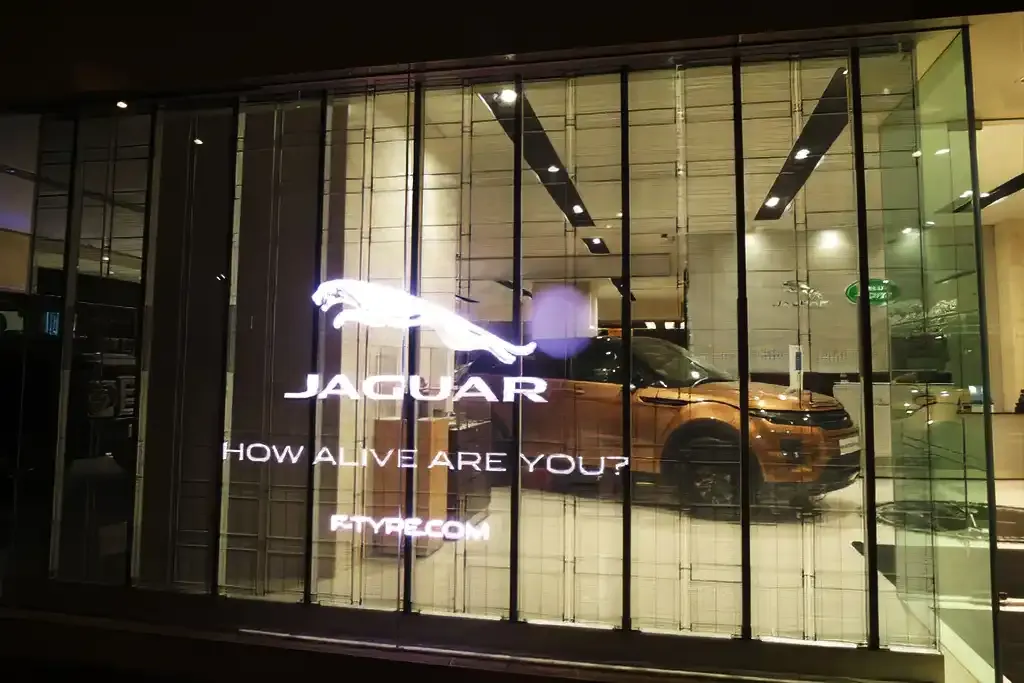
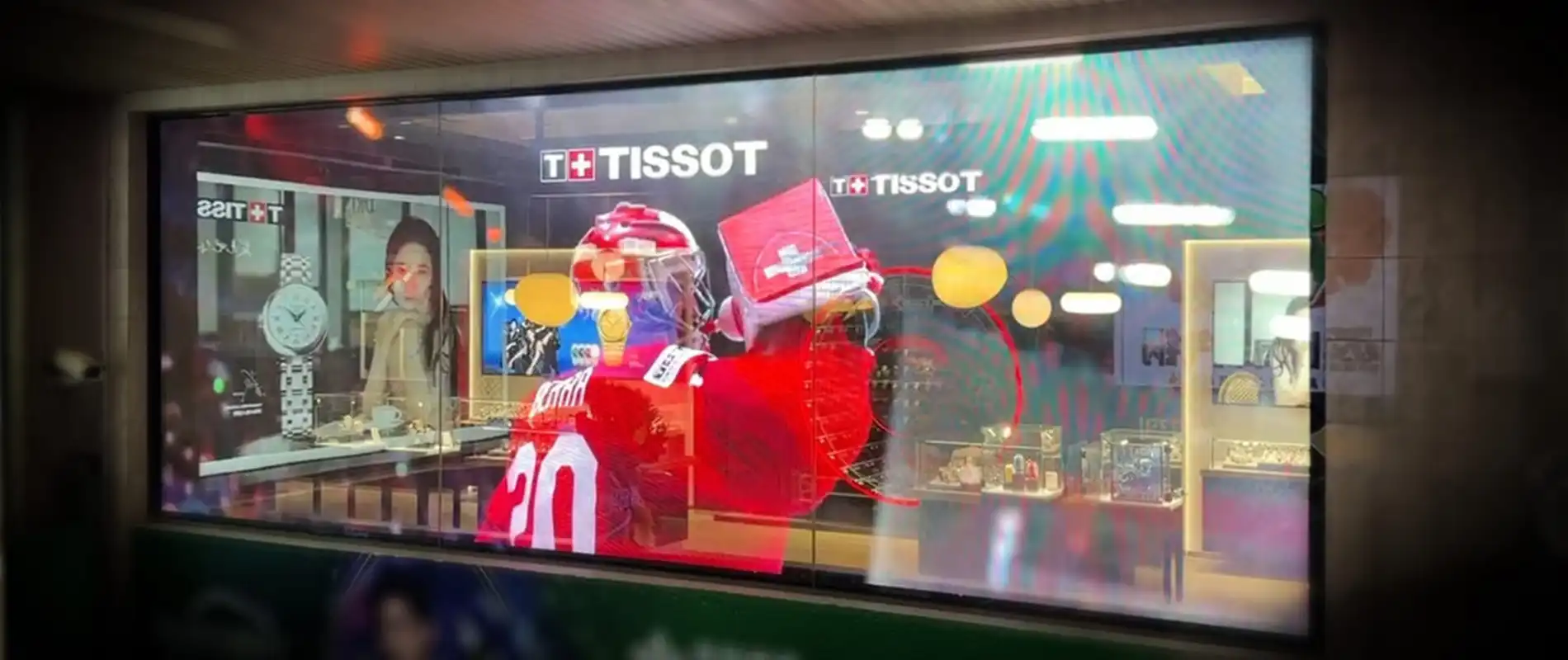
Transparent LED LED Display: A transparent LED screen mounts directly behind the window glass and runs advertising content without blacking out the view from inside. The core trade-off is simple. More pixels per square metre give you a sharper image but let less light through, while a coarser pitch keeps the glass more open but limits close-up resolution. Settle that trade-off before you specify a screen and you avoid costly rethinking later.
How a Window LED Screen Sits Behind Glass
The panel goes on the interior face of the glass, hung, stacked, or fixed flush depending on the frame. The LEDs sit on a structure open enough that daylight still passes through the gaps between the pixel clusters. From outside, a passer-by sees the video content. From inside, staff and merchandise stay visible through the areas between the lit pixels.
That open ratio (how much light still passes through versus how much the panel blocks) depends on the density of the LED structure. A finer pixel pitch means more LED material per square metre, which cuts the open area. A coarser pitch leaves more open area but reduces the maximum image resolution. Neither end of the pitch range is universally better. The right choice depends on what the glass is for and how close viewers stand.
Indoor LED screens installed conventionally have no see-through requirement, so they can pack every square millimetre with LED material. A transparent window screen accepts a lower fill factor as the cost of keeping the glass usable.
Pixel Pitch Options and What They Mean in Practice
ARECH's window LED screen is available in six pixel pitches: P1.2, P1.5, P1.9, P2.6, P2.9, and P3.9. Each 250 × 250 mm module tiles the same physical footprint regardless of which pitch you choose.
- P1.2 and P1.5 pack pixels tightly. The image is sharp at close range, which suits a high-street window where pedestrians pass within a metre or two. The denser structure reduces the open-glass area more than the coarser options.
- P1.9 and P2.6 sit in the middle of the range. Typical retail counters and lobby installations land here. You get enough resolution to read brand messaging clearly, with a reasonable amount of the window left transparent.
- P2.9 and P3.9 space the pixels further apart. The open-glass ratio is higher, so the view from inside stays clearer, but you need to stand further back before the image looks cohesive. This range suits a large facade or a wide atrium, where viewing distances are naturally longer.
The same distance-equals-pitch rule applies here as on any LED screen. A P3.9 screen starts to look clean from roughly 4 metres. A P1.5 can hold together from under 2 metres. Match the pitch to the closest point where a viewer will actually stop and look.
Cabinet Sizes and the 250mm Modular Grid
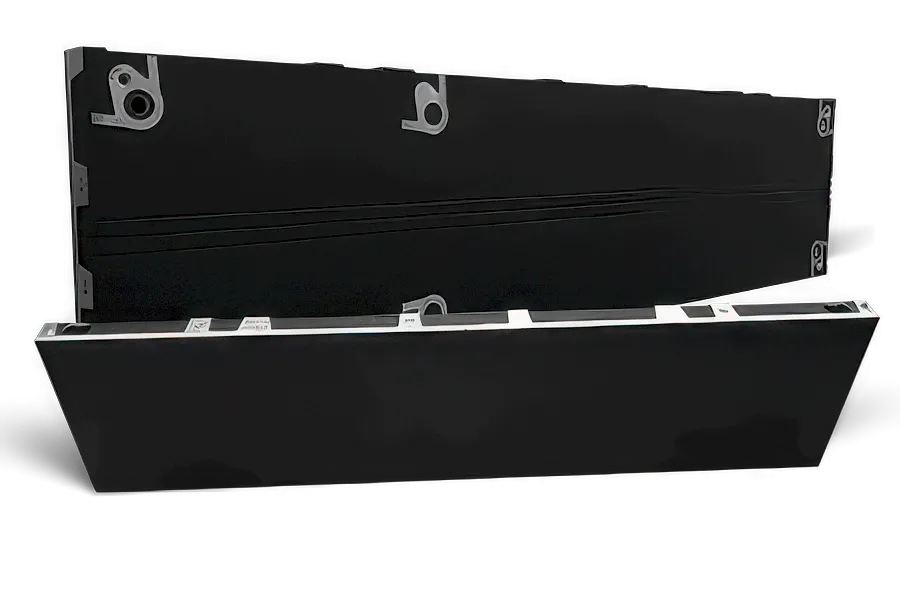
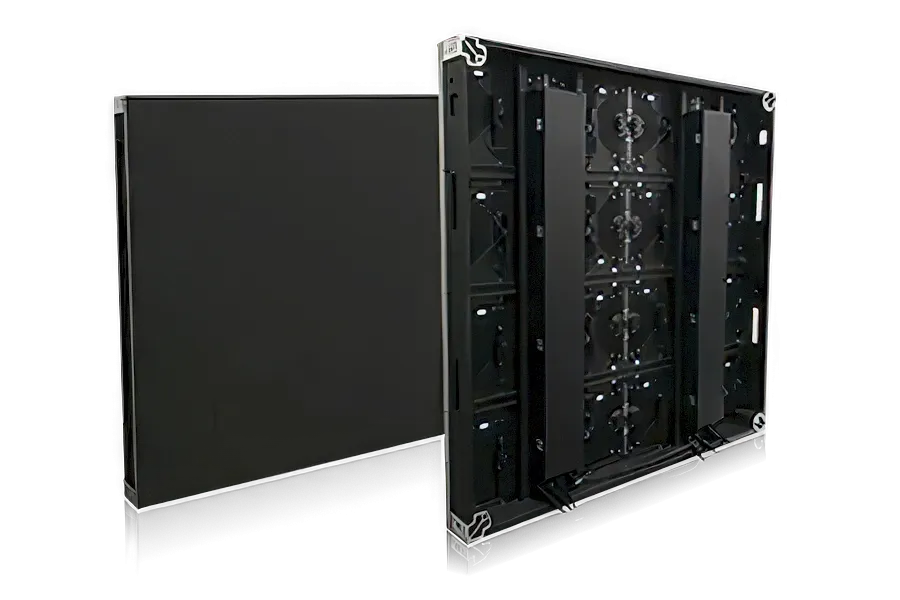
The module is 250 × 250 mm. Cabinets are built in 250 mm increments: 500 × 500 mm, 500 × 1000 mm, 1000 × 250 mm, 1000 × 500 mm, and 1000 × 750 mm. This means any installation footprint is a multiple of 250 mm.
In practice, that grid drives the planning conversation early. If a window opening is 2,400 mm wide, the screen fills it cleanly at 2,250 mm or 2,500 mm (nine or ten 250 mm columns). An odd width between those steps either leaves a deliberate gap at one edge or gets trimmed in the framing. Knowing this before construction drawings are finalised avoids surprises on site.
Cabinet aspect ratios stay flexible within the 250 mm grid. Portrait-oriented thin banners, wide landscape fills, and square formats are all achievable. The mix of cabinet sizes means a tall, narrow window and a wide, squat shopfront can both be tiled without custom parts.
Front-Access Service: Why It Matters for Retail
On a conventional LED installation behind a wall or ceiling, a faulty module usually means access from the rear. On a window screen, that rear face is the glass, so you cannot reach behind it without removing the whole panel.
ARECH's window LED uses full front-access maintenance. A magnetic tool releases the LED modules, power supply boxes, and control cards from the front face of the screen. A technician standing inside the shop can swap a failed module in minutes without dismounting the entire installation, moving stock, or closing the window display.
In a retail environment, the window is active advertising space, and losing it for half a day means losing footfall. That makes front access a practical requirement, not a convenience.
Where Transparent LED Fits and Where It Does Not
Window LED is a strong fit in specific situations:
- Retail storefronts where the window display needs to carry advertising content and still show merchandise or the interior atmosphere to people outside.
- Shopping mall facades with large glass panels that would otherwise be passive.
- Airport retail and departures halls where floor-to-ceiling glass is standard and advertising space is at a premium.
- Hospitality and exhibition spaces with glass partition walls that double as display surfaces.
It is the wrong tool when the glass is a primary light source for the space behind it, or when the installation needs to be fully weatherproof for outdoor-facing exposure. Outdoor-rated transparent displays exist, but the product described here is specified for indoor use, with front-access maintenance designed for interior service. For exposed facades and open-air signage, see the outdoor LED screen range, which is built to a different waterproofing and brightness standard.
For high-resolution close-range applications where see-through is not a requirement, a conventional HD wall delivers more pixels in the same footprint at a lower unit cost.
Getting the Specification Right
The conversation that sets up a window LED project covers four things: the glass dimensions (in 250 mm steps), the closest viewing distance (which drives the pitch), the ambient light conditions (which drive the brightness specification), and how much of the interior view needs to stay visible.
ARECH engineers start from those four inputs and work backwards to a pitch and configuration. There is no single SKU to push. The six-pitch range exists so the screen can be matched to the brief, rather than the brief bent to fit a standard product.
CONTINUE READING
More from the blog
-
How ARECH's LED Display Warranty Works: 2 or 3 Years, and What Decides It
How ARECH's LED Display Warranty Works: why the term is 2 or 3 years depending on the LED chip, what is excluded, and…
-
Inside the Ageing Chamber: Every Cabinet is tested
Inside the Ageing Chamber: Every ARECH LED cabinet runs an ageing-chamber burn-in cycle before pack-out.
-

Curved and Flexible LED: How It Bends and Where It Fits
Curved and Flexible LED: How bend into columns, domes, and sculptural shapes, why magnetic mounting makes them…
-

What ARECH's LED Display Certifications Mean: CE, FCC, RoHS, ISO 9001, LVD
What ARECH's LED Display Certifications Mean: CE, FCC, RoHS, and ISO 9001, LVD certification each cover on an LED…
-

Indoor vs Outdoor LED Displays: How to Choose the Right One
Indoor vs Outdoor LED Displays: differ in brightness, weatherproofing, pixel pitch, and cabinet build. Here is how to…
-

Pixel Pitch Explained: Matching an LED Display to Viewing Distance
Pixel Pitch Explained - What pixel pitch means, how it sets minimum viewing distance, and how to pick the right LED…