
Immersive and XR LED: Wrap-Around Walls, 3D and Virtual Production
Immersive and XR LED — curved wraps, 270° ceilings, 7680Hz+ refresh for virtual production — and where XR LED fits film, brand, and cultural venues.
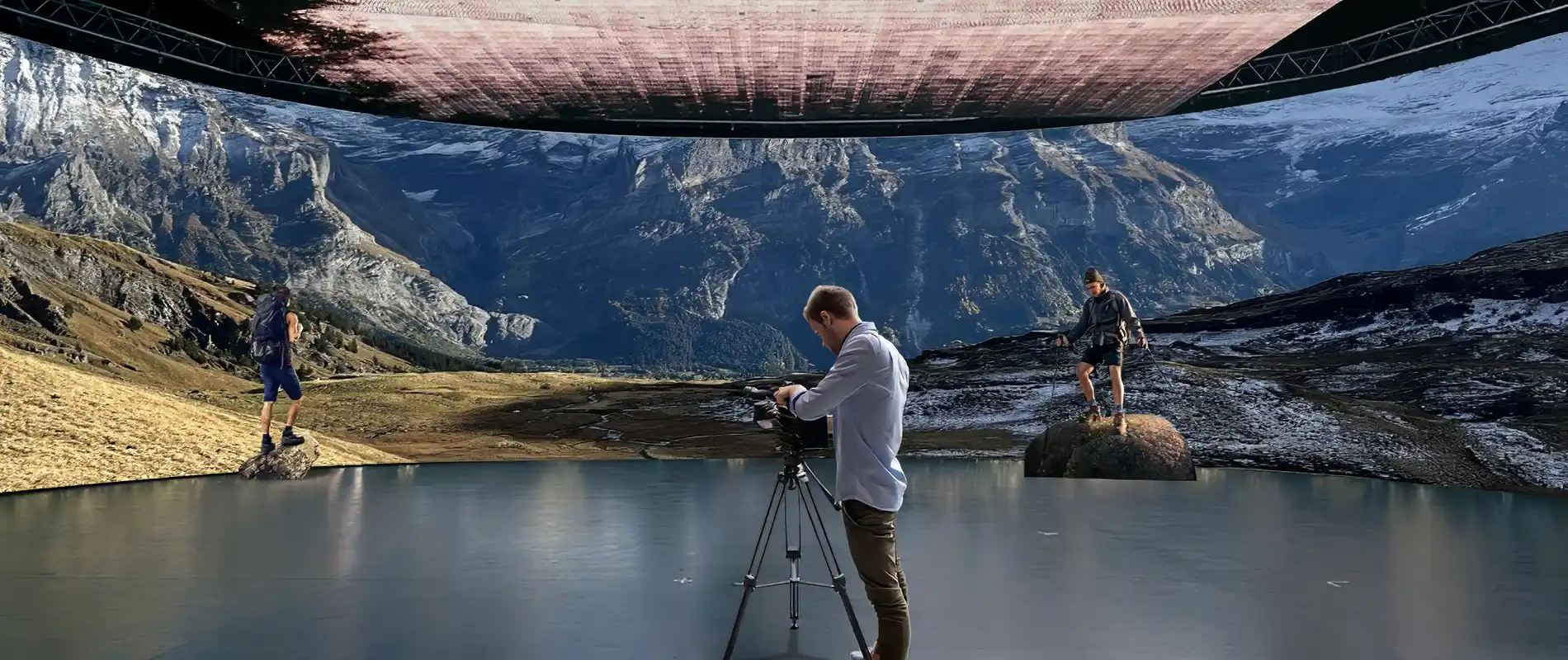
Immersive and XR LED: A flat rectangle of LED panels works for most installations scenario. Immersive and XR applications are the exception. They ask the screen to curve around the viewer, bend overhead, fold into tunnels, and hold image quality under a camera lens at the same time. Each demand sets its own requirement on the hardware. Here is what matters, and why.
Why a Flat Panel Is Not Enough
Most LED installations are flat and frontal. The viewer faces the screen. The relationship is clear.
Immersive environments break that contract. In a virtual production stage, the actor works inside the screen. In a cultural installation, the audience walks through it. In a branded experience space, the content wraps 360 degrees around a standing visitor. The screen has to follow the viewer, not the other way around.
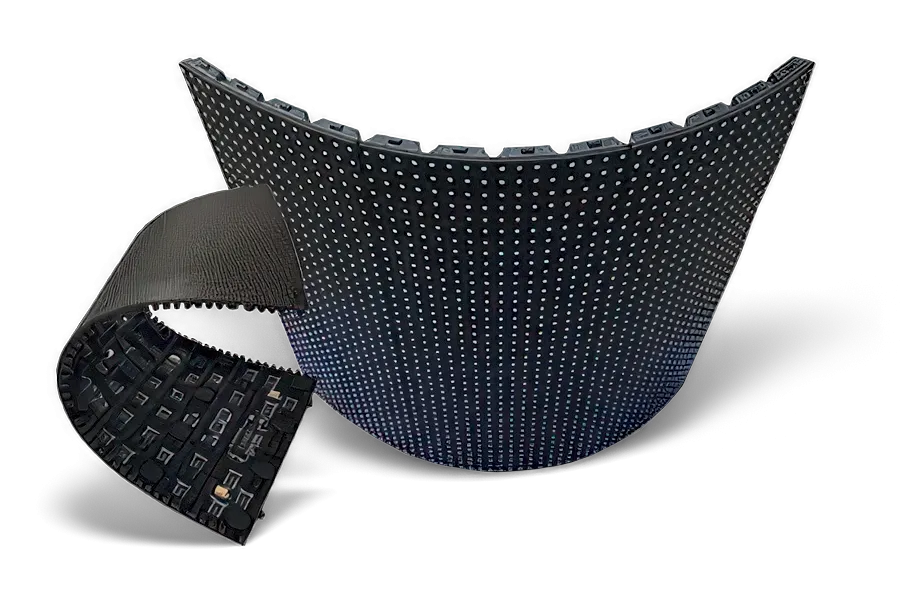
That requirement immediately rules out standard rigid panels. Building a 270-degree wrap from flat cabinet sections leaves visible seams at every joint, and the geometry of a straight cabinet forces compromise angles at the corners. Flexible LED modules solve the geometry problem: the modules bend, so the surface follows the curve rather than approximating it with flat facets.
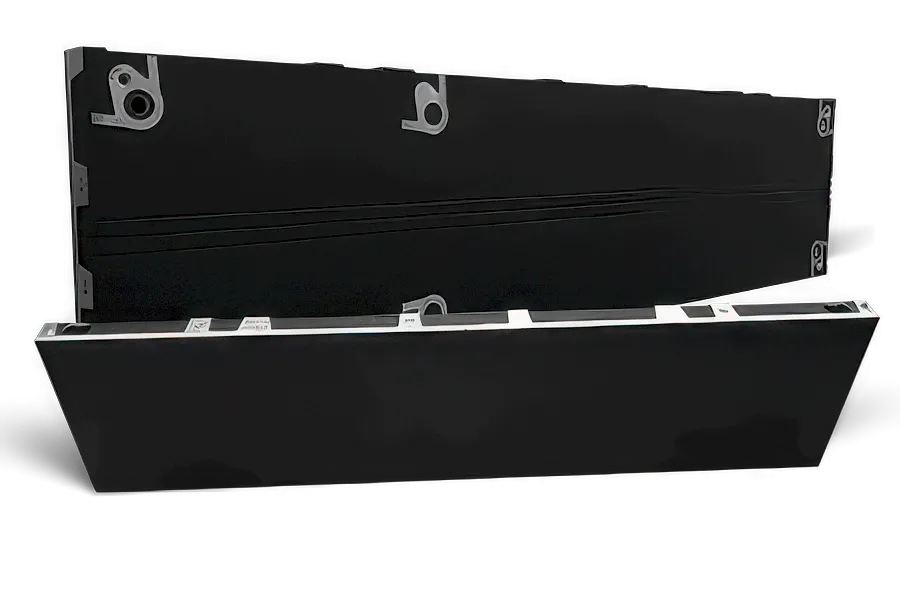
ARECH flexible LED screens are built with lightweight, modular panels that curve, bend, and fold to order — covering cylindrical columns, concave walls, overhead ceiling arrays, tunnel cross-sections, and the partial-sphere shapes that appear in premium brand experience builds.
The 270-Degree Wrap and What It Physically Requires
A 270-degree wrap-around screen encloses the viewer on three sides. It is the most common geometry in immersive cinema and high-end brand experience installations.
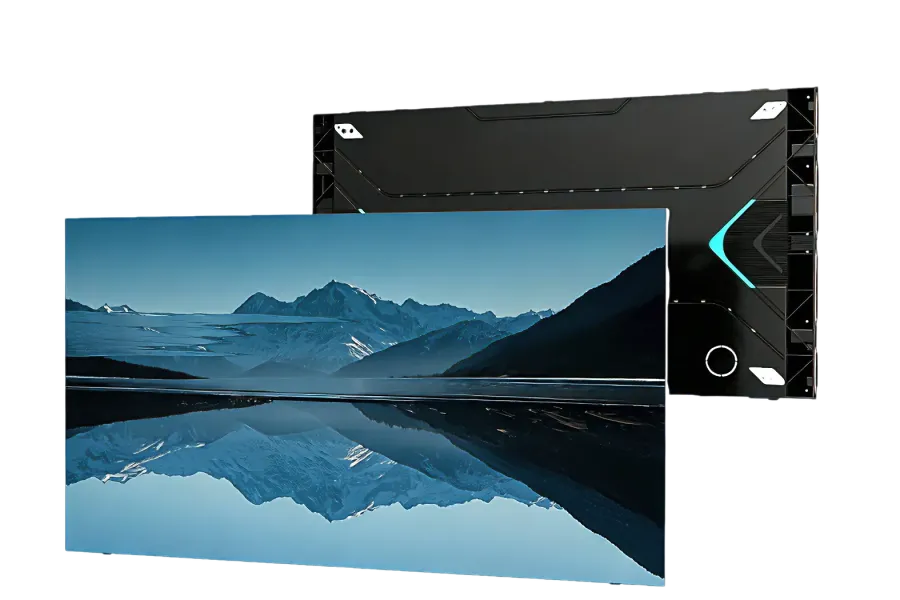
Building one cleanly takes more than flexible panels. The joins between modules have to disappear. A seam that is invisible on a flat wall becomes a persistent line on a curved surface because the eye scans across it continuously rather than treating it as an edge.
ARECH addresses this through two parallel mechanisms: precision-cut modules that fit together at the physical level, and algorithm-driven hardware synchronisation that matches brightness and timing across every join. The result is a surface that reads as continuous rather than assembled.
The same approach applies to ceiling installations and LED tunnels. Those geometries are harder to build than side walls — gravity works against mounting, and the viewing angle changes constantly as a person moves through the space — but the module and synchronisation approach is the same.
Refresh Rate and On-Camera Virtual Production
The refresh rate requirement for immersive LED diverges sharply from standard signage the moment a camera enters the frame.
A screen running at a standard refresh rate produces a visible scanning artefact when captured by a camera. The camera's shutter samples the LED's scan cycle at a different frequency and the image shows banding or a rolling dark line. This is not a display defect — it is a mismatch between two independent clocks.
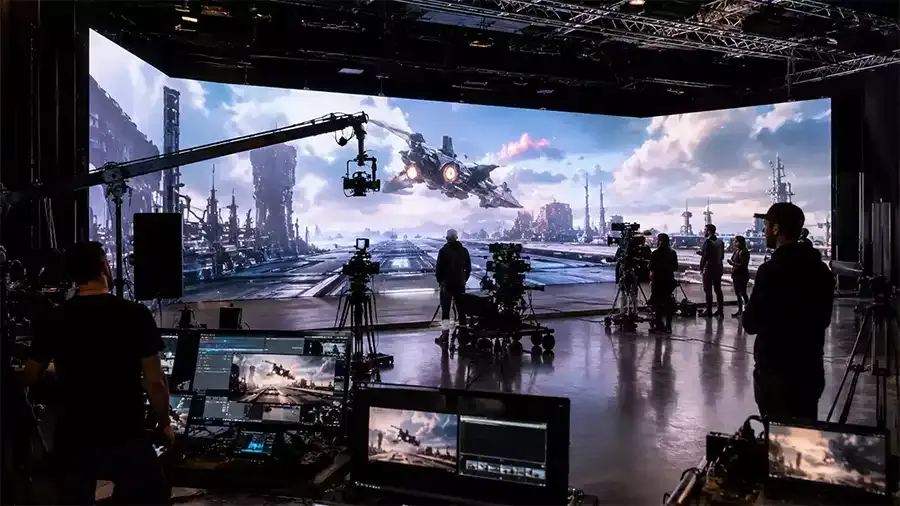
The fix is to raise the LED refresh rate high enough that it stops being the limiting factor. For XR and virtual production use — where the LED wall is the background in a film or live broadcast, lit in real time as the camera moves — a refresh rate of 7680Hz or higher eliminates the artefact at the shutter speeds and frame rates used in professional production.
This is also why XR and VP installs specify fine pixel pitch. The camera is effectively another viewer, and it is positioned close to the wall. The image has to hold together at that distance without visible pixel structure entering the frame.
Applications That Use Immersive LED
The hardware requirements described above (flexible geometry, joins that disappear, high refresh) converge on a specific set of applications:
- Film and virtual production. LED volumes replace location shooting and physical sets. The actor performs inside the LED environment; the camera captures both actor and background simultaneously without compositing.
- Extended reality (XR) experiences. Visitors wear no headset. The LED environment provides the immersive field of view directly, often combined with motion tracking and interactive content.
- Cultural tourism installations. Museums, heritage sites, and visitor attractions use wrap-around LED to place audiences inside historical scenes, natural environments, or artistic worlds.
- Live entertainment and premium venues. Concert residencies, theatrical productions, and high-end nightclubs use curved LED to place the audience inside the visual environment rather than in front of it.
- Brand experience spaces. Product launches, flagship stores, and exhibition stands where visitors spend time inside the brand world rather than walking past a display.
- Gaming arenas and interactive exhibits. Spaces designed for extended engagement where the screen is the environment, not the attraction.
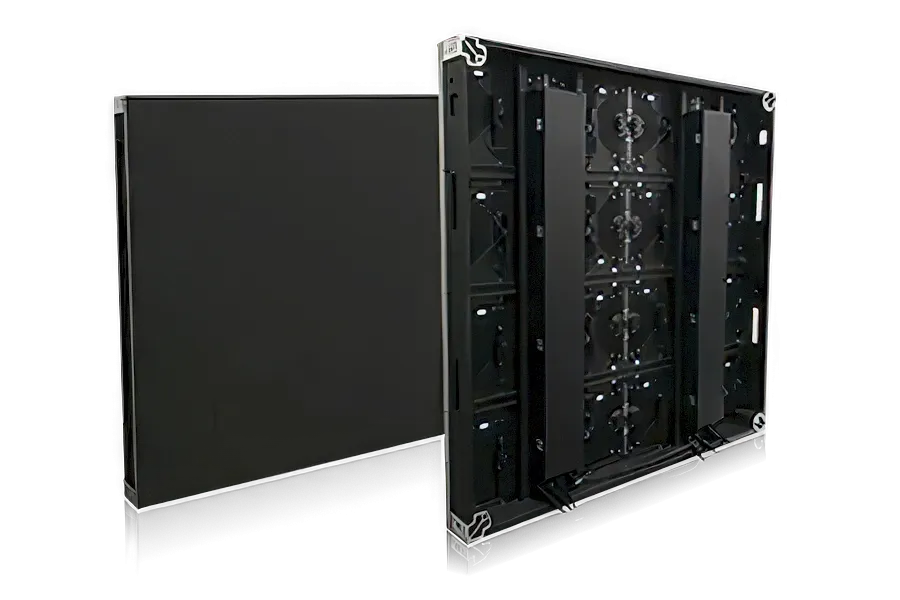
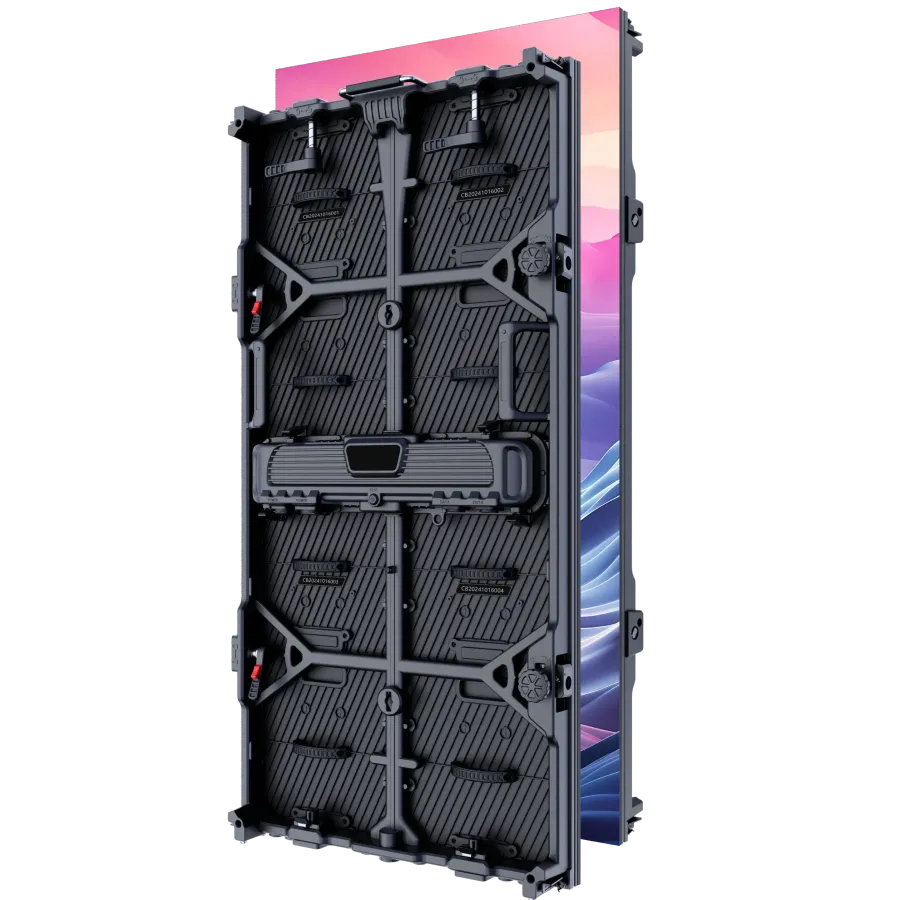
The rental LED range covers the touring and temporary installs in this list — the magnesium-body cabinet reduces transit weight for events that build and strike repeatedly. Fixed cultural and brand installations draw from the flexible LED range for the geometry and from the HD wall range where fine pixel pitch at close viewing distance is the primary specification.
Specifying an Immersive LED Project
Immersive installations have more interdependencies than a flat wall, so the specification conversation is different.
The geometry comes first. A 270-degree wrap at a given diameter determines module count, splice-point count, and the synchronisation load on the processor. Ceiling and tunnel installations add structural loading calculations that flat walls do not require.
Refresh rate is specified against the shooting requirements. If a camera will be in the space, the production team's frame rate and shutter choices drive the minimum refresh figure. If the installation is for live audiences only and no camera ever frames the wall, a lower refresh spec is acceptable and the budget can be redirected elsewhere.
Pixel pitch is specified against the closest viewer — or the closest camera position. In an XR volume, that can be under two metres from the wall. In a walk-through cultural installation, it depends on the path layout.
ARECH's engineering team works through these constraints with the integrator or production designer before any panel count is committed. Send the geometry, the camera spec if applicable, and the closest viewing or shooting distance. The brief goes directly to the engineer who will own the project.
CONTINUE READING
More from the blog
-
How ARECH's LED Display Warranty Works: 2 or 3 Years, and What Decides It
How ARECH's LED Display Warranty Works: why the term is 2 or 3 years depending on the LED chip, what is excluded, and…
-
Inside the Ageing Chamber: Every Cabinet is tested
Inside the Ageing Chamber: Every ARECH LED cabinet runs an ageing-chamber burn-in cycle before pack-out.
-

Curved and Flexible LED: How It Bends and Where It Fits
Curved and Flexible LED: How bend into columns, domes, and sculptural shapes, why magnetic mounting makes them…
-

What ARECH's LED Display Certifications Mean: CE, FCC, RoHS, ISO 9001, LVD
What ARECH's LED Display Certifications Mean: CE, FCC, RoHS, and ISO 9001, LVD certification each cover on an LED…
-

Indoor vs Outdoor LED Displays: How to Choose the Right One
Indoor vs Outdoor LED Displays: differ in brightness, weatherproofing, pixel pitch, and cabinet build. Here is how to…
-

Pixel Pitch Explained: Matching an LED Display to Viewing Distance
Pixel Pitch Explained - What pixel pitch means, how it sets minimum viewing distance, and how to pick the right LED…