
Choosing an Outdoor LED Display: Brightness, IP Rating and Front Maintenance
How to spec an outdoor LED display: pixel pitch vs. viewing distance (P2.5–P30), brightness up to 10000 nits, IP65/66/67 ratings, front-maintenance access, and TCO.
An outdoor LED display lives in conditions an indoor screen never sees: direct sun, driving rain, salt air, temperatures from −30 °C to 70 °C, and a mounting point nobody can reach without a crane. Spec it well by settling four things in order — pixel pitch, brightness, protection grade, then maintenance access — before anyone argues about cabinet size or install method.
Start With Viewing Distance, Not Pixel Pitch
Most buyers come to outdoor LED with a pitch number in mind. The better starting point is the distance between the screen and the nearest viewer, because that distance dictates the pitch, not the other way around.
The relationship is consistent across the outdoor range:
- P2.5 – P4 — 1 m – 15 m
- P5 – P8 — 3 m – 40 m
- P10 – P16 — 5 m – 80 m
- P20 – P30 — 10 m – 150 m
A highway billboard read from 50 metres does not need fine pitch. A P10 or P16 delivers a sharp image at that distance and keeps both cost and power consumption in check. A building-facade display on a pedestrian street, where people walk past at 5 metres, calls for a much tighter pitch. Settle the closest viewer first, then work back to the pitch.
The available outdoor pitch range runs from P1.9 up to P30, so there is a well-supported option for every scenario from close-up facade detail to large-format highway advertising.
Brightness: Beating Direct Sunlight
Inside a building, 1000–2000 nits looks vivid. Outdoors, sunlight reflecting off a dark panel easily reaches 5000 lux on the surface. If the display cannot output enough light to beat that, the image washes out to grey.
The baseline for an outdoor LED display is 5000 nits. In locations with prolonged strong sun, such as south-facing facades, open plazas with no canopy, and coastal sites, 6000 nits is the practical floor. Extreme-environment screens go up to 10000 nits, with automatic brightness adjustment that dials back at night so the panel does not blind passing traffic.
Check two things alongside the peak number. First, how the brightness adjusts: a fixed-output panel running at 10000 nits at 2 AM is a problem for neighbours and for power bills. Second, whether the nit rating is measured across the full panel, not just the brightest LED package.
IP Rating and Environmental Hardening
IP65, IP66, and IP67 appear on almost every outdoor LED spec sheet. They are not interchangeable.
- IP65 means dust-tight and protected against a sustained low-pressure water jet from any direction. This covers rain, car wash overspray, and hose-down cleaning. It is the minimum for any outdoor installation.
- IP66 adds protection against powerful direct water jets. Specify it for highway roadside installations and coastal locations with salt-spray exposure.
- IP67 means the cabinet can withstand short-term full submersion. This is a specific requirement for semi-buried ground installations or sites with genuine flood risk, not a routine upgrade.
Beyond the IP number, three other factors matter in outdoor environments:
- Anti-UV coating. Plastics and adhesives on a panel facing the sun for 12 hours a day degrade faster than the LEDs themselves. Panels without UV-resistant materials crack and yellow within a few years.
- Operating temperature range. Cabinet designs that run from −30 °C to 70 °C handle everything from a Siberian winter to a Middle Eastern summer without thermal shutdown or condensation damage.
- Lightning protection. Open-area installations such as poles, rooftops, and exposed facades need a protection path to ground built into the cabinet, not bolted on afterwards.
Corrosion-resistant aluminium cabinets address the structural side: salt air, acid rain, and cleaning chemicals do not pit or seize the frame over time.
Front Maintenance Access Changes the Economics
When a module fails on a ground-floor interior screen, you reach in from behind. On a 10-metre pole-mounted outdoor billboard, that is a crane or a scaffolding crew. This is where front-maintenance (FM) design changes the ownership cost considerably.
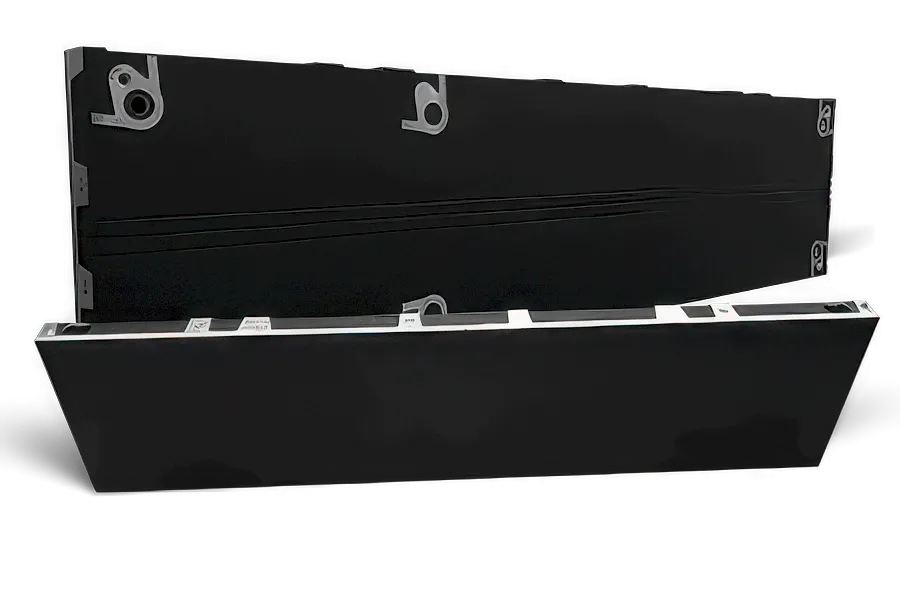
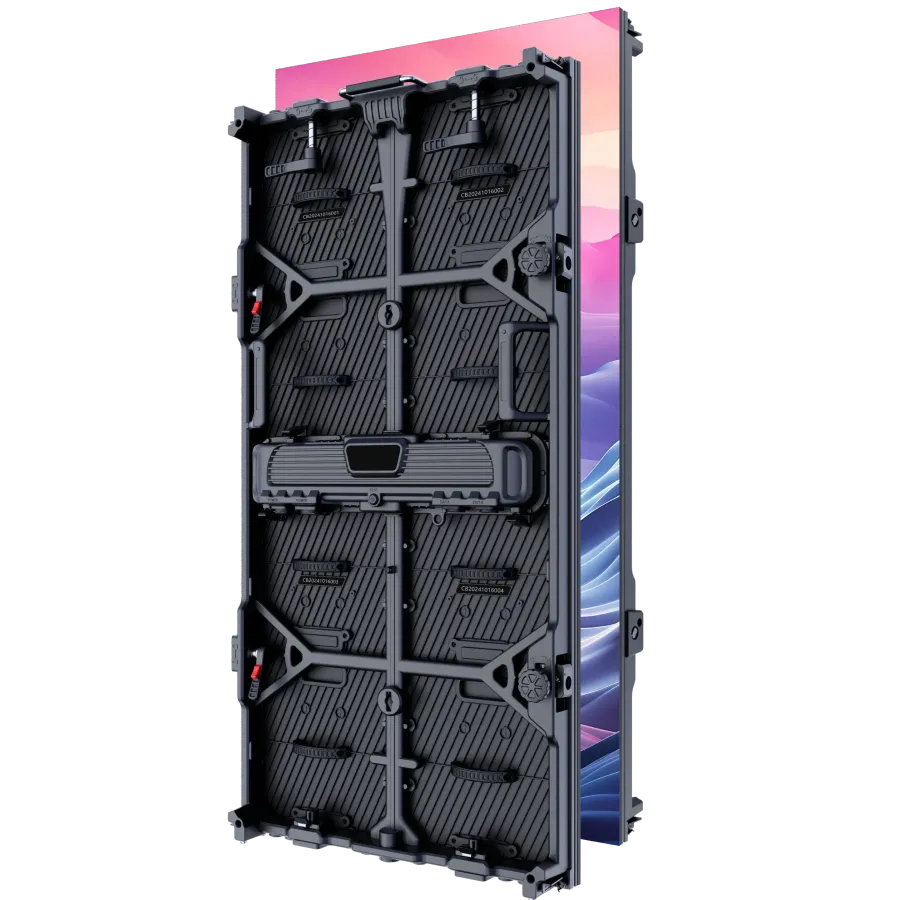
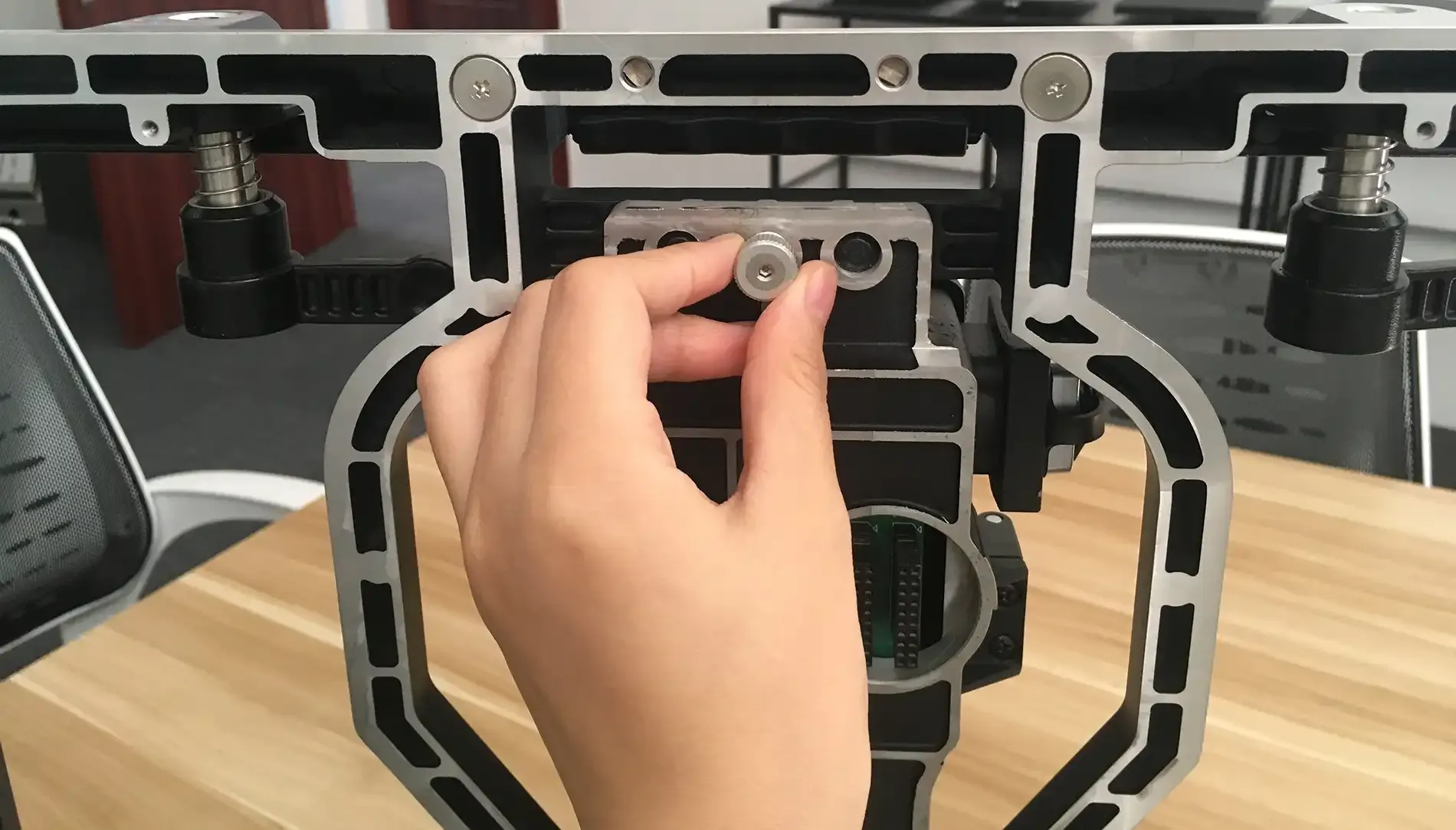
An FM outdoor screen is built so that every service procedure happens from the front face: module swap, power supply access, and component check. Modules attach magnetically and release without tools. A single technician on a ladder can replace a failed module in minutes instead of coordinating a full rigging operation.
ARECH puts the cost reduction from this approach at over 60% on labour and service across the operating life of the screen. That figure is an ARECH claim based on its FM product line, not an independent audit, but the mechanism is plain: fewer access requirements mean fewer people, shorter site windows, and no crane hire. Over a 50,000-hour panel lifespan, those service calls add up.
The FM design applies from P1.9 through P3.9 in the outdoor fine-pitch range — screens close enough to a building or ground that a single technician can reach the face.
Install Methods and Total Cost of Ownership
Outdoor LED installs fall into six broad methods: wall-mounted, ground-standing, semi-buried, column or pole-mounted, curved splicing, and temporary hanging. The right choice depends on the site, the structural load capacity, the viewing angles required, and the maintenance approach described above.
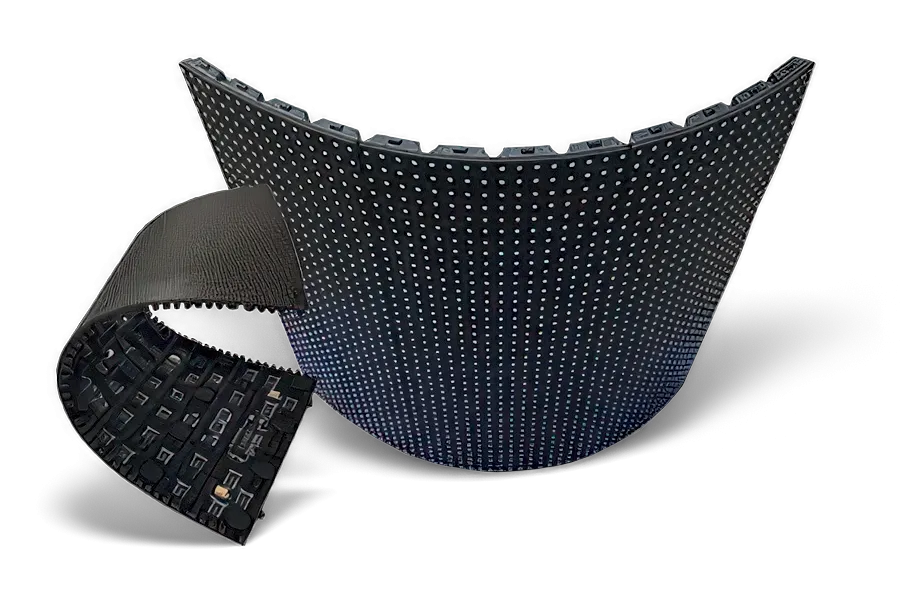
Wall-mounted and pole-mounted are the most common for permanent commercial advertising. Ground-standing suits large-format installations where wall attachment is impractical. Semi-buried panels are used for floor-level effects or ground-mounted directory boards. Curved splicing handles cylindrical columns and architectural wraps. Temporary hanging serves events and staged installations.
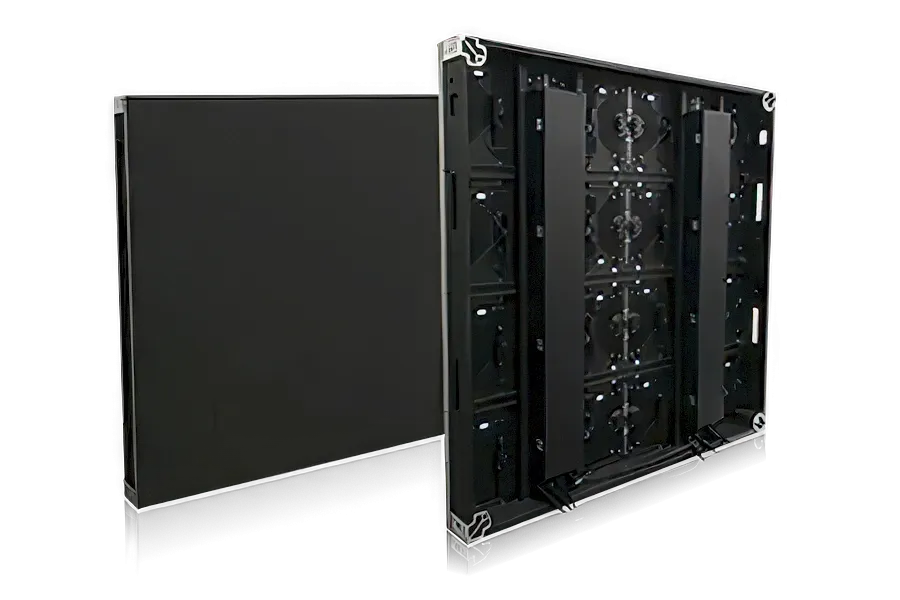
Cabinet modularity affects all of these. Standard cabinet footprints in the 640×640 mm, 960×960 mm, and 1000×1000 mm range (with modular increments of 250 mm or 320 mm) let integrators build to exact site dimensions without custom fabrication on every project.
On total cost of ownership, the panel price is one line item. Power consumption over 50,000 hours is a larger one. Common-cathode circuit architecture reduces power draw by 20–30% compared with traditional designs (again, an ARECH product claim), which at commercial electricity tariffs is a real saving on a large outdoor installation running 16 hours a day.
See the full outdoor LED screen range for datasheet downloads, and contact the engineering team with your site dimensions and viewing distance for a pitch recommendation.
CONTINUE READING
More from the blog
-
How ARECH's LED Display Warranty Works: 2 or 3 Years, and What Decides It
How ARECH's LED Display Warranty Works: why the term is 2 or 3 years depending on the LED chip, what is excluded, and…
-
Inside the Ageing Chamber: Every Cabinet is tested
Inside the Ageing Chamber: Every ARECH LED cabinet runs an ageing-chamber burn-in cycle before pack-out.
-

Curved and Flexible LED: How It Bends and Where It Fits
Curved and Flexible LED: How bend into columns, domes, and sculptural shapes, why magnetic mounting makes them…
-

What ARECH's LED Display Certifications Mean: CE, FCC, RoHS, ISO 9001, LVD
What ARECH's LED Display Certifications Mean: CE, FCC, RoHS, and ISO 9001, LVD certification each cover on an LED…
-

Indoor vs Outdoor LED Displays: How to Choose the Right One
Indoor vs Outdoor LED Displays: differ in brightness, weatherproofing, pixel pitch, and cabinet build. Here is how to…
-

Pixel Pitch Explained: Matching an LED Display to Viewing Distance
Pixel Pitch Explained - What pixel pitch means, how it sets minimum viewing distance, and how to pick the right LED…