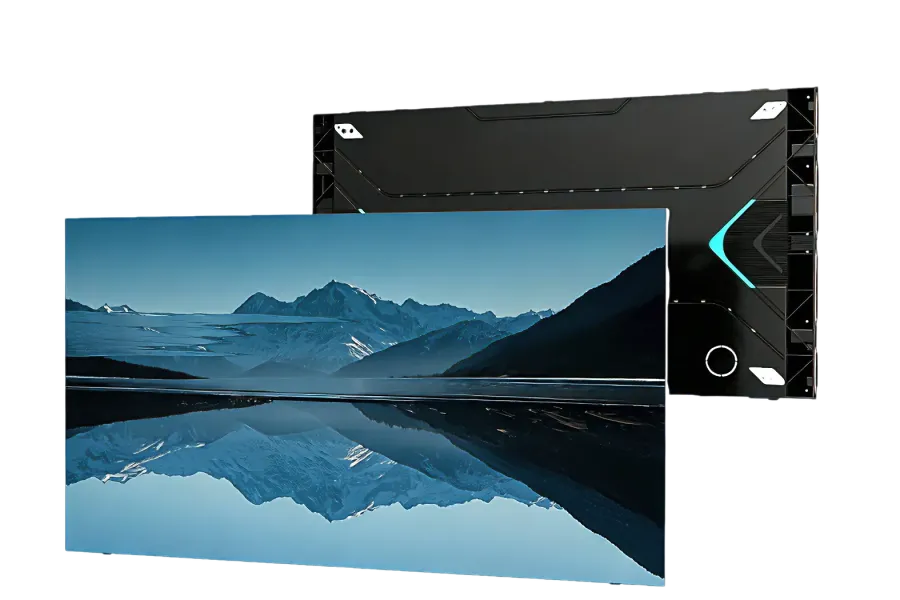
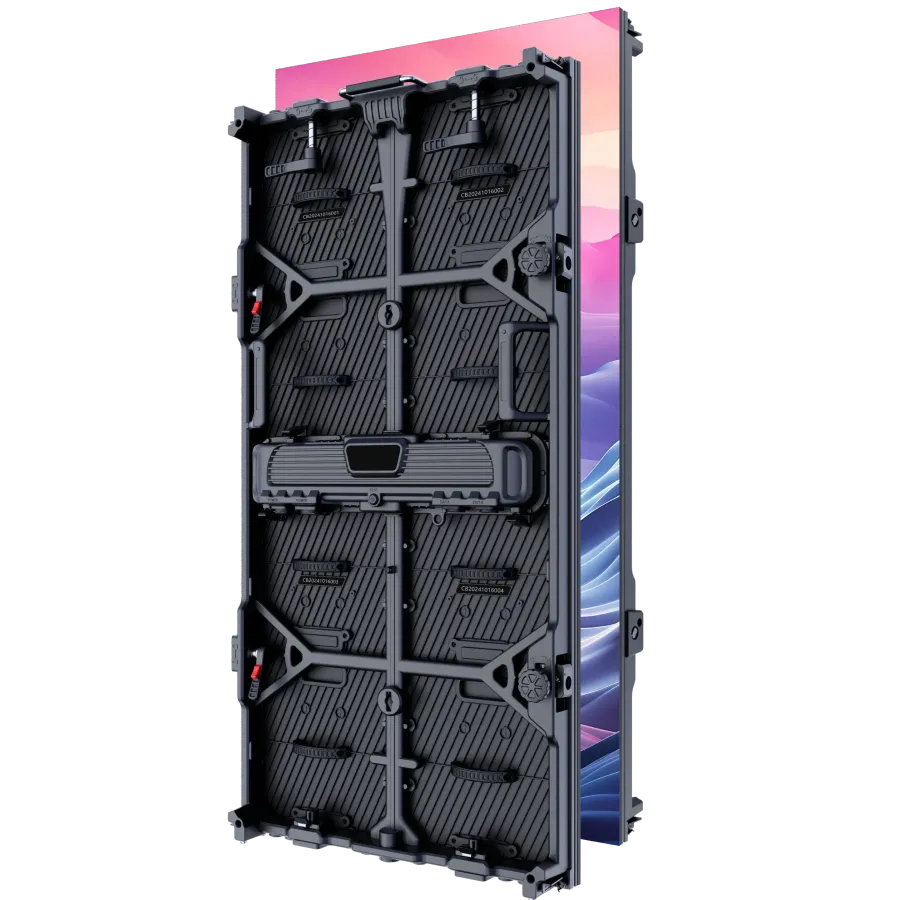

Quality testing pipeline for ARECH Screen Passes Before It Ships
Quality testing pipeline - The full QA chain every ARECH LED screen goes through before shipping — from component checks to ageing tests, burn-in, function testing, and final inspection.
Quality testing pipeline - A screen failing at a client's venue costs everyone — the client's event, their trust, and the time to fix it. ARECH runs a multi-stage LED screen quality testing chain in the factory precisely so that any failure surfaces there, not at the installation site. Here is what that chain looks like, step by step.
It Starts Before Assembly
LED screen quality testing does not begin on the production line. It begins when components arrive.
Every raw material and electronic component from ARECH's supplier partners goes through an incoming evaluation before it enters assembly. This is the first filter in the chain — a bad LED driver or a batch of marginal solder paste is far cheaper to catch at goods-in than after a thousand panels have been built around it.
Once components clear incoming checks, LED module assembly begins.
Three Ageing Tests Run at the Module Stage
After assembly, each module enters a series of ageing tests. These are designed to stress the electronics in controlled conditions so that any weakness shows up early.
Full-White Ageing. Every LED is driven at 100% brightness simultaneously, at 255 white level, for 1,000 hours or more, adjusted per product type and industry standard. At peak thermal load, solder joint degradation, driver voltage drift, and LED luminous decay all show up faster. Anything that is going to fail under sustained load tends to fail here.
Full-Colour Ageing. The module cycles dynamically through red, green, and blue at 100% rated brightness. This checks colour consistency across all three channels and confirms that each pixel responds correctly across the full colour range, not just at white.
Power Cycle Test. The module is repeatedly powered on and off, simulating years of regular use. Weak solder joints, unstable power connections, and marginal components that survive steady-state operation often fail under repeated switching stress. This test finds them.
72-Hour Burn-In, Per Module, Every Module
After the three ageing tests, every single module that leaves the production line goes through a 72-hour burn-in protocol. That is not a batch sample — it is every module.
Burn-in is a focused, non-negotiable step in the chain. It is also one stage among several, not the whole story. If you want the full detail on what happens during burn-in and why the duration matters, the dedicated article covers it: Inside ARECH's 72-Hour Burn-In Protocol.
Assembly Inspection and Full-Screen Testing
Once modules pass the individual ageing and burn-in stages, they are assembled into complete display panels. Two further checks follow at the full-screen level.
Flush Assembly Inspection. This verifies structural stability, connection reliability, and that module-to-module gaps and alignments sit flush. A display made of well-tested modules can still pick up a mechanical or connection fault during assembly, and this inspection catches it.
Comprehensive Function Testing. The completed screen is assessed for signal integrity, refresh rate performance, and correct operation across multiple content scenarios — video playback, dynamic graphics, mixed content. The full-screen pass confirms that every module works together, not just in isolation.
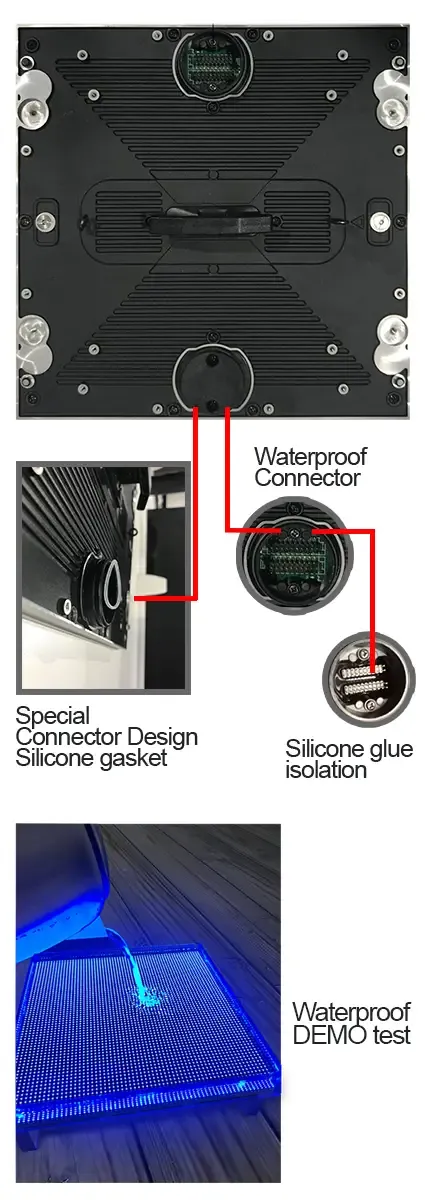
For outdoor units, the process also includes environmental resilience checks appropriate to the product's IP rating and the conditions it will face in the field. See the outdoor LED screen range for specs.
Durability and Safety Inspection, Then Ship
The final stage before packing is a durability and safety inspection: mechanical shock tests and electrical safety checks across the finished unit.
The sequence in full: component vetting → module assembly → full-white ageing (1,000+ hours) → full-colour ageing → power cycle test → 72-hour per-module burn-in → assembly into complete displays → flush assembly inspection → full-screen function testing → durability and safety inspection → ship.
That is nine distinct checkpoints. The point is not the length of the list — it is the logic behind it. Every stage is positioned to catch a specific failure mode at the cheapest possible moment. A failure identified in the factory costs a replacement part. The same failure at a client's venue costs the event.
If you are specifying a screen and want to know how these standards apply to a particular product family, the indoor, outdoor, HD wall, flexible, and rental ranges each carry their own spec sheets. Or send the project brief directly and the engineering team will walk through the relevant standards for the application.
CONTINUE READING
More from the blog
-
How ARECH's LED Display Warranty Works: 2 or 3 Years, and What Decides It
How ARECH's LED Display Warranty Works: why the term is 2 or 3 years depending on the LED chip, what is excluded, and…
-
Inside the Ageing Chamber: Every Cabinet is tested
Inside the Ageing Chamber: Every ARECH LED cabinet runs an ageing-chamber burn-in cycle before pack-out.
-

Curved and Flexible LED: How It Bends and Where It Fits
Curved and Flexible LED: How bend into columns, domes, and sculptural shapes, why magnetic mounting makes them…
-

What ARECH's LED Display Certifications Mean: CE, FCC, RoHS, ISO 9001, LVD
What ARECH's LED Display Certifications Mean: CE, FCC, RoHS, and ISO 9001, LVD certification each cover on an LED…
-

Indoor vs Outdoor LED Displays: How to Choose the Right One
Indoor vs Outdoor LED Displays: differ in brightness, weatherproofing, pixel pitch, and cabinet build. Here is how to…
-

Pixel Pitch Explained: Matching an LED Display to Viewing Distance
Pixel Pitch Explained - What pixel pitch means, how it sets minimum viewing distance, and how to pick the right LED…